

Below is a clear, practical guide on whether different cured and charcuterie meats require refrigeration, plus exactly how I store them at home to keep the flavour and texture where I want it.
I’ve organised this by product type with a quick-reference table first, then the deeper “how I handle it” notes for each style.
Storage tips:
- Keep whole dry-cured meats intact for longer quality and easier storage.
- Store sliced meats airtight or wrapped tightly to limit oxygen exposure.
- Follow the packaging directions on commercial packs, especially once opened.
- Refrigerate anything sliced, opened, or handled often (it dries out and dulls faster).
Cured meat is a broad category. Whether it needs refrigeration mostly comes down to two practical questions: is it dry-cured or cooked, and is it whole or sliced.
If you only remember one thing from this page: whole pieces store better than slices. Once you cut into something, you’ve increased its surface area and oxygen exposure dramatically, and the storage rules get stricter.
| Meat Product | Needs Refrigeration? |
| Dry-Cured, Cold-Smoked Meat — Packaged / Sliced | Yes |
| Dry-Cured, Cold-Smoked Meat — Whole / Homemade | Yes (or cool place) |
| Hot-Smoked Meat (e.g., Bacon, Chicken, Fish) | Yes |
| Biltong / Jerky (properly dried) | No |
| Dry-Cured Fermented Salami — Whole | Cool place or Fridge (Will Dry Out) |
| Dry-Cured Fermented Salami — Sliced | Yes |
| Whole-Muscle Salumi (Prosciutto, Parma, Lonza, Bresaola) — Whole | Cool place |
| Whole-Muscle Salumi — Sliced | Yes |
| Pâté / Rillettes / Confit (fat preservation) | Yes |
| Ham (Whole on the bone) | Yes (in a damp bag/cloth) |
| Ham (Sliced) | Yes |
Why whole cuts store better than slices: Whole pieces limit oxygen exposure and keep the surface more protected. They also lose moisture more slowly, so they don’t turn dry and dull as quickly.
Slices are the opposite. Every thin piece has lots of exposed surface area, so the aroma fades quicker, and the texture changes faster. This is why I keep salami and whole-muscle pieces intact as long as I can, and only slice what I’ll actually serve.
Fridge vs cool place: Traditionally, many dry-cured meats were stored without refrigeration. In a consistently cool, dark environment, intact dry-cured meats can hold their quality very well.
In most modern homes, though, temperatures swing too much. That’s why I default to the fridge for anything opened, handled often, or already cut. The fridge is simply more consistent, and consistency is what protects flavour and texture.
My simple check before serving: I always look and smell first. It’s normal for properly dried pieces to firm up over time. If something smells “off” or shows unusual discoloration or textures, I don’t serve it. This is a practical kitchen habit, not medical advice.
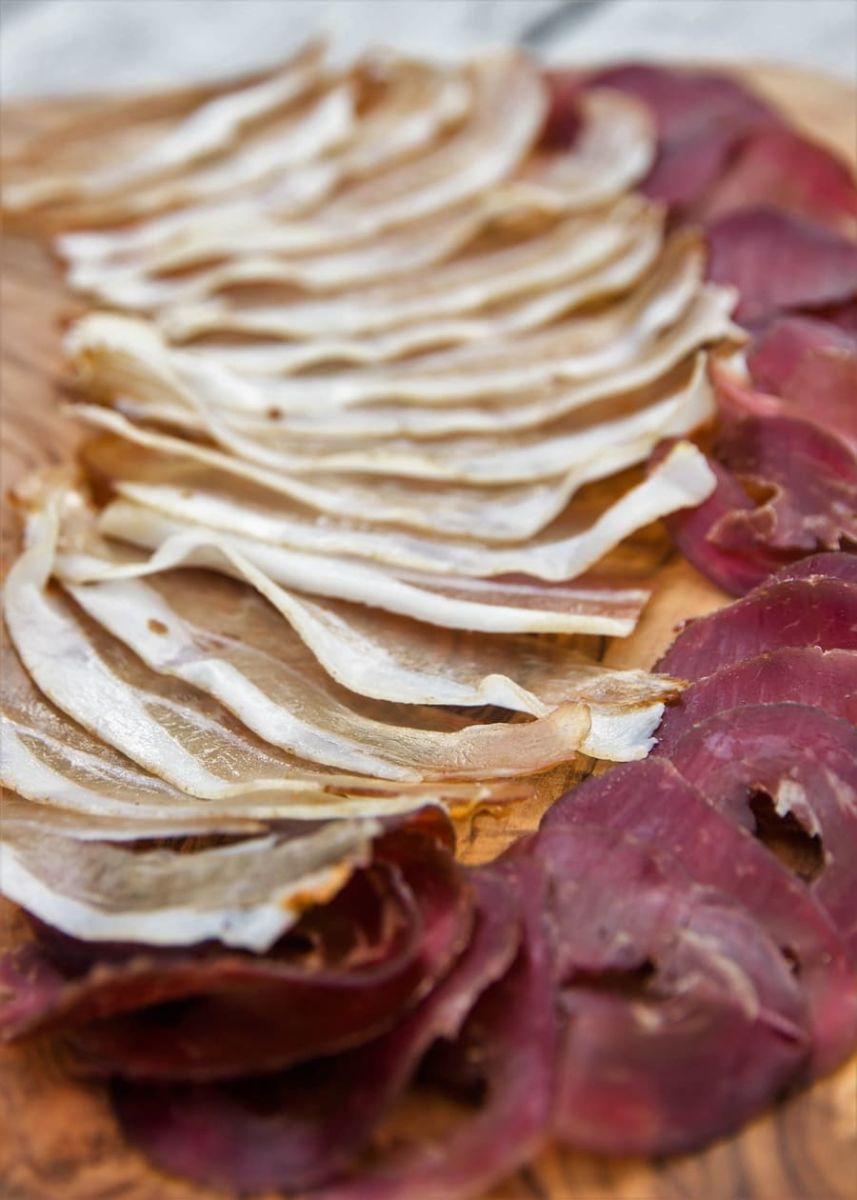
How I Store Different Types of Cured Meat
Below, I break each style down by what it really is in practice: dry-cured vs cooked, and whole vs sliced. That combination tells you whether refrigeration is essential and which wrapping or container works best.
Cold-Smoked Meat (Packaged or Sliced)
Refrigerate? Yes.
Cold smoking adds flavour at low temperatures, but once something is sliced and packaged, it behaves like any delicate, ready-to-eat food. The protective advantage of being whole is gone.
At home, I reseal opened packs tightly and refrigerate straight away. If I’m not going to finish it quickly, I portion it so I’m not repeatedly opening the same large pack and letting oxygen hit everything over and over.
Cold-Smoked Meat (Whole, Well-Dried Pieces)
Refrigerate? Yes — and for most households, the fridge is the simplest, most consistent option.
Whole, well-dried pieces (think speck-style slabs, cold-smoked pancetta, or cold-smoked fish that has lost a meaningful amount of moisture) are more robust than sliced product. They still benefit from staying cool and staying protected from light and air movement.
If I’m working through a piece steadily, I keep it wrapped and only expose the cut face when I’m slicing. The goal is simple: keep the bulk of the meat protected, and only “open it up” right before eating.
Hot-Smoked Meats (Cooked Products Like Bacon, Chicken, Fish)
Refrigerate? Yes.
Hot smoking cooks the meat. I treat it like any cooked product: refrigerate promptly, store airtight, and portion what I won’t eat soon. If I’ve made a big batch, I freeze portions so I’m not keeping half-used packs in the fridge and slowly losing quality.
Biltong and Jerky (Fully Dried Meats)
Refrigerate? Generally, no, provided they are properly dried.
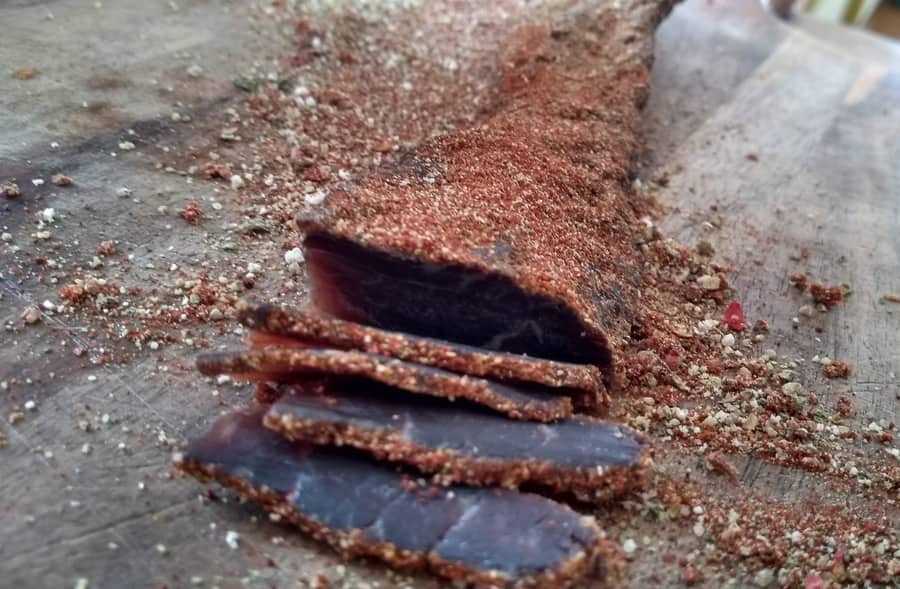
Biltong and jerky are dried until their moisture level is low enough that they no longer behave like fresh meat. That’s why they’ve traditionally been used for travel, hiking, and long days outdoors.
At home, I usually store fully dried biltong in a paper bag or loosely covered container at room temperature. This allows some airflow and prevents condensation, which can occur when you seal something warm and dry inside plastic.
If you prefer softer biltong or jerky, refrigeration can help slow further drying. I’ll do this if a batch is right where I like it, texture-wise, and I don’t want it turning too hard over time.
The key with these styles is moisture control, not temperature alone. As long as they stay dry and aren’t sealed while warm, they store very predictably.
Dry-Cured Salami (Whole vs Sliced)
Refrigerate? Whole: a cool place or fridge. Sliced: yes.

Whole dry-cured salami is designed to be stored intact. Hung in a cool place, it will continue to dry very slowly. This gradual moisture loss is part of how flavour develops and concentrates over time.
In practice, I often keep whole salami in the fridge. Modern fridges provide stable temperature and moderate humidity, which makes storage simple and predictable. The trade-off is that salami can dry a little faster, so wrapping becomes more important.
Once salami is sliced, the rules change completely. The exposed cut face dries quickly and is far more affected by oxygen. I always refrigerate sliced salami, store it airtight, and only cut what I expect to serve in the near term.
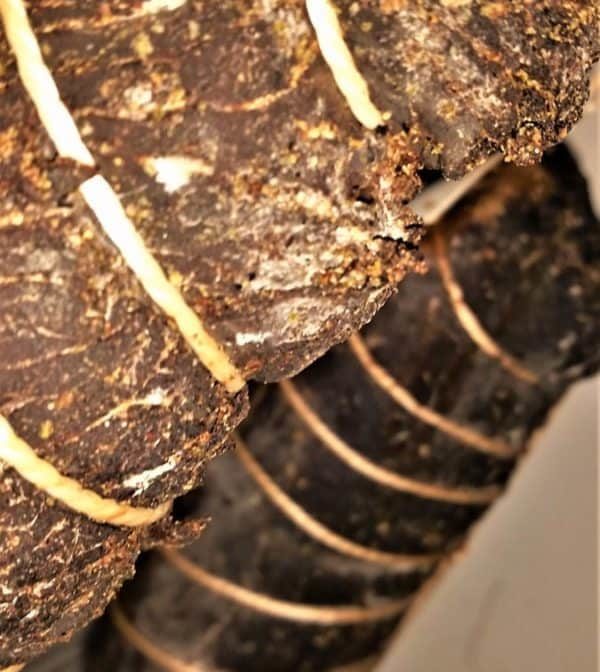
My general approach is simple: keep the bulk intact for as long as possible. Every time you slice more than you need, you shorten the window where the meat looks, smells, and tastes its best.
Whole-Muscle Salumi (Prosciutto, Lonza, Bresaola)
Refrigerate? Whole: a cool place works. Sliced: yes.
Whole-muscle salumi are among the most stable cured meats when kept intact. Large pieces like prosciutto or bresaola have minimal exposed surface area relative to their size, which helps protect flavour and texture.
In traditional settings, these cuts were stored in cool, dark rooms with little temperature swing. In a modern home, refrigeration offers the same consistency without relying on ideal environmental conditions.
Once sliced, however, these meats behave much more like any other deli product. I always refrigerate sliced portions and wrap them tightly to slow drying and aroma loss.
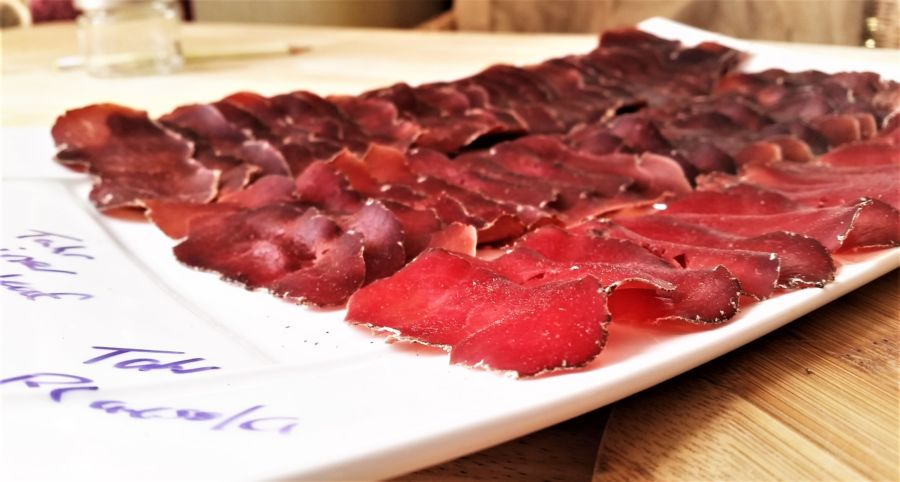
If I’m serving guests, I slice just before eating. This keeps the aroma bright and prevents the slightly dull flavour that can develop when thin slices are left exposed for too long.
Pâté, Rillettes, and Confit (Fat-Protected Meats)
Refrigerate? Yes.

Pâtés and rillettes are often sealed under a layer of fat or butter, which limits oxygen exposure. That protection works only while the seal remains intact.
Once opened, I keep these refrigerated at all times. They’re sensitive to handling and temperature changes, so airtight containers and cold storage are essential to maintain texture and flavour.
Ham (Whole or Sliced)
Refrigerate? Yes — whole hams benefit from moisture control, sliced hams need airtight refrigeration.
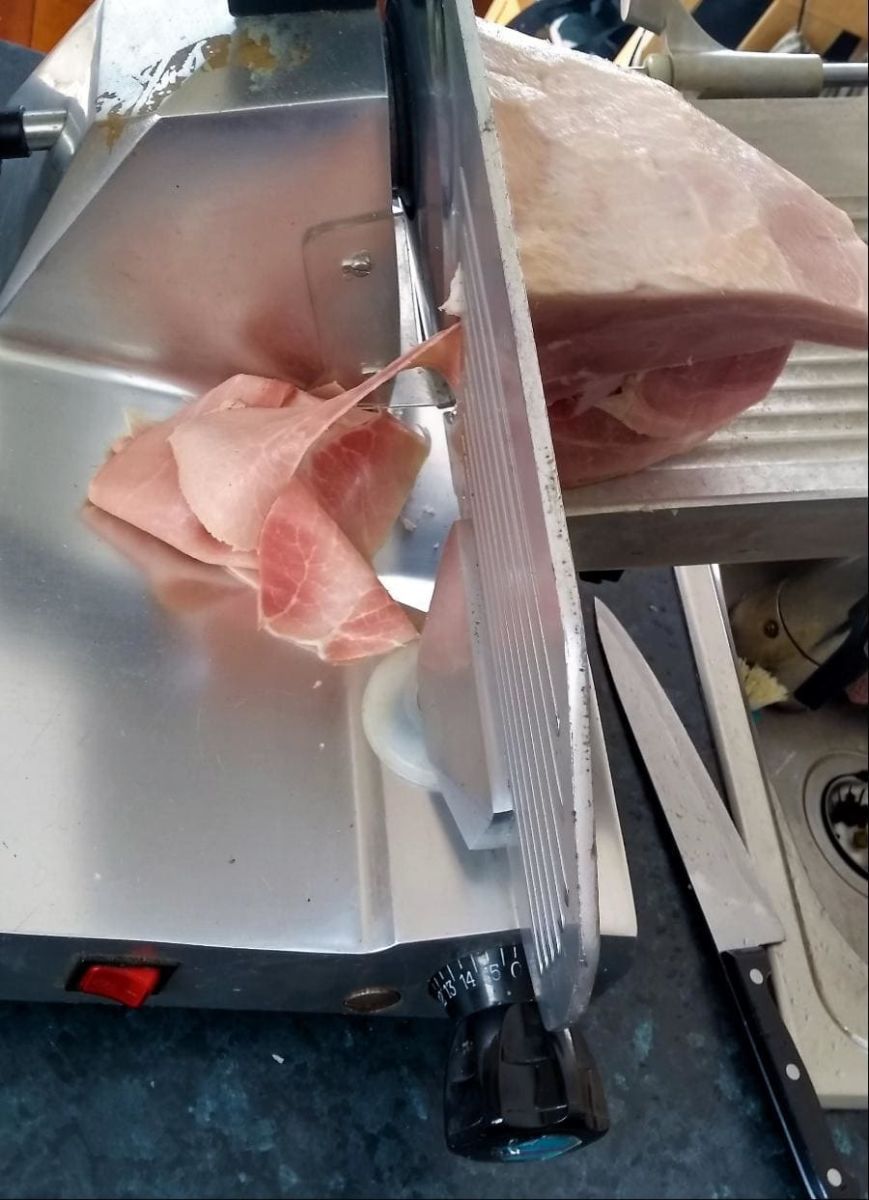
Whole hams, especially bone-in or country-style hams, are fairly robust but still benefit from controlled storage. In the fridge, the goal is to prevent the cut surface from drying out too fast while keeping the rest of the ham cool and protected.
I usually wrap the cut face and keep the rest loosely covered. A purpose-made ham bag works well, but a slightly damp cloth does the same job by slowing moisture loss without sealing the ham in plastic.
Sliced ham is much more delicate. Once it’s cut, I store it airtight in the fridge and avoid repeated opening. The more often it’s exposed to air, the faster the texture and aroma decline.
Why Whole Cured Meats Store Better Than Sliced
The single biggest factor in cured meat storage is surface exposure. Whole pieces have a relatively small exposed area, which slows moisture loss and limits oxygen contact.
Slicing dramatically increases surface area. Thin slices dry faster, lose aroma more quickly, and pick up fridge smells if they’re not wrapped well. That’s why professional kitchens and traditional producers always keep cured meats whole until service.
At home, this translates into a simple habit: keep cured meats intact for as long as possible, and only slice what you intend to eat.
Fridge vs Cool Place — How I Decide at Home
Many dry-cured meats were developed long before refrigeration existed. Salt, drying, and time were the original preservation tools, and in the right environment, they still work extremely well.
The challenge is that most modern homes don’t have consistently cool, stable storage spaces. Temperature swings and light exposure make results unpredictable.
Because of that, I default to refrigeration for anything opened, sliced, or handled often. The fridge provides consistency, which protects flavour and texture over time.
A Note on Tradition and Modern Storage
It’s easy to forget that cured meats were once everyday foods stored without fridges. Legs of ham hung in cellars, salami dried slowly in cool rooms, and smoked meats travelled long distances without ice.
Modern processing and packaging have changed how many products behave. Added moisture, tighter packaging, and frequent handling all mean storage needs are different today than they were historically.
Using a fridge doesn’t make cured meat “less traditional” — it simply gives you a more predictable environment in a modern kitchen.
FAQs About Storing Cured Meat
Should I refrigerate sliced dry-cured meats?
Yes. Once sliced, dry-cured meats should be refrigerated and stored airtight to limit oxygen exposure and drying. I only slice what I plan to serve.
Can whole dry-cured meats be stored outside the fridge?
Whole dry-cured meats can be stored in a consistently cool, dark place. In most modern homes, refrigeration offers more reliable temperature control.
Why do sliced cured meats lose flavour faster?
Slicing increases surface area, which speeds up moisture loss and oxygen exposure. This causes aroma and texture to fade more quickly.
Do hot-smoked meats need different storage than dry-cured meats?
Yes. Hot-smoked meats are cooked products and should always be refrigerated and stored like other cooked foods.
If you store cured meat a bit differently at home, or you’ve found a setup that works particularly well for certain cuts, leave a comment below — I’m always interested in how others handle theirs.

Tom Mueller
For decades, immersed in studying, working, learning, and teaching the craft of meat curing, sharing the passion and showcasing the world of charcuterie and smoked meat. Read More
Hi Tom – thanks for the article. I have a question. If I have a whole leg of prosciutto and I have started to slice off it (but obviously haven’t polished the whole leg in one sitting) what is the best way to store the leg that has been cut into? Thanks, Chanel
Hi Chanel,
That’s awesome, a whole leg! In many parts of Europe, these are kept at ‘room’ temperature, but that depends on what your room temperature is!
Lets say 12-20 Cel or 53-70 Far.
It’s basically ‘preserved’, so you can just slice off wafer thin slices for months. keep as much skin/fat intact to protect the meat.
Putting it in the fridge (which is a dry environment), will mean it will dry out faster and isn’t ideal.
Hopefully the slicing is working, if you need some more advise, check out this slicing post I wrote . https://eatcuredmeat.com/how-to-thinly-slice-cured-meat/
All the best,
Tom
Hello Tom,
What if I need to store not sliced meat/sausage for a long period of time? Will it dry out in the freezer being kind of vacuum sealed (I don’t have a vacuum sealer but there are techniques to accomplish that? Regards
sausage? if fresh sausage freezing is what I use.
If charcuterie salami unsliced and dry-cured can be hung in room temperature since it is preserved it may dry slightly. Same with whole muscle meat unsliced like pancetta or braesola. In the fridge will dry it out too much! Putting it in a container will not give good results either (1 week maybe, gets slimy).
I have had a friend freeze parma ham, defrost and bring on a camping trip (didn’t need to be frozen). Once thawed it was fine!
Hi Tom.
I was curing my own bacon, in the fridge, but the door didn’t close properly. It was like that for 3 days. It’s being cured in plenty of salt and
Sugar. The doors now closed but I was wondering if it’s safe or if I should ditch it.
Hey Leigh, a little vague to assess in detail. If it was me, I trust my senses – nose mainly! If I don’t feel completely safe from a good sniff. It gets the Biff! (thrown out!)
Not worth risk personally.
Cheers Tom
I bought some linguica from a butcher… like a 1#link, wrapped on deli paper, and left in fridge for 3 weeks. Is it still good? Is it unsafe to cook and eat?
I googled that sausage, its fresh and smoked I think. If it isn’t fully cured and dried – I wouldn’t eat it. On honest food website, the recipe says its should last 5 days in the fridge….
Sounds similar to Calabrian Italian or Chorizo styles!
Hi
I make home made salami (7 yrs ) and Hang it out in garage to dry naturally then I vacuum seal them whole and store in cupboard . I then use as needed. They last ages.
In regards to the bresaola can I do the same or do I need to vac seal and store in fridge and what shelf life will it have
I am also doing capicola
I am using the UMAii system
Hey there, yes Umai makes it alot easier, different approach then balancing mold cultures with a DIY curing chamber!
Braesola is whole muscle and more straightforward then salami since less exposure then mincing for salami.
Hard to tell from a few sentences, but if it was me, sounds pretty good. Umai first then vac seal fridge is safe, depends on your ‘cupboard’ temperature!
You just want to cut that whole muscle meat ultra wafer thin when its ready (info on deli slicer here)
Hi Tom
I am just about ready to slice my bresaola in a couple of days as it will meet the required weight lose
Can I vacuum seal and refrigerate and will it keep like salami? I’m thinking yes
Also I am ready for my capicola as well
The problem I have is that I have got 2
one of them has great contact with the bag and the other not so great
The one that has great contact is 100 gm from weight to cut
The other is 400 gm
I have re vacuumed a couple of times and it still has not a good contact
There is no smell and no black to it
It still looks great
I’m thinking I just wait a bit longer?
Any thoughts or advice ?
Hey there, definitely can vac pac once 30-40% weight loss. I don’t know your setup so its hard to comment though.
Not sure what great contact means?
Waiting is always key with this craft!
Bought some cured salami sticks, dried and vacuum sealed, in Italy. They have been stored in the refrigerator. How long are they good in there for?
SO much variation! best before date?! 🙂
If it was dry cured Italian style salami, you can easily go 6 months or years potentially in my experience. If it has the white powder (penicillin) some people find this can alter taste.
Just eat it! salut!
Hi Tom,
i’m installing a wine room, will be air conditioned to a level 16 C, and will naturally drop to about 15 C during winter. Will this be a good place to hang/store meats? Cheers, David
Has potential! Once you get that good mold going I think so. I know of a few meat curers who have glorious wind rooms with dry cured meats as well! Moisture 70-80% and some airflow is also useful, the ebook on the courses page give you a rundown on conditions. Cheers Tom
Hi, Tom! I want to send to friends some cured pork loin and gravlax. I plan to send it, vacuum sealed in a box with refrigerant gels and in overnight shipping. Is it safe?
I would do the same, sounds good 🙂
My neighbor brought over a gift for Christmas and told me it was a do it yourself meal. Quote- She said it had been salted or something like that for 7 days of needs 7 days not sure – Unquote. So I said what do I do then, she didn’t know. I figured it was something like dry goods that had all the ingredients measured up. It was wrapped in a box with a Brown flat paper bag on top, okay I thought brownies. Wrong it was fun steak that way out 3 days. Are they still good?
Hey, very hard to tell from a description! Either salt for seasoning or salt for curing. If they said cook it, it’s not ‘dry curing’ it take weeks/months to dry out a salted chunk of meat. If it’s biltong or jerky that’s diff again!
Not enough detail soz
Hi Tom, I live in Italy and although I am married to an Italian he has no idea how to store cured meats. His family throws a dish towel over the top of the meat and leave it on the sideboard. They eat it daily and it’s finished pretty quickly! When meat is well-cured it seems to work well to vacuum seal it, but when it’s a bit ‘soft’ to the touch (and doesn’t slice easily) I feel like it needs to cure more/dry out a little? I’ve tried storing large chunks of prosciutto or a whole salami wrapped in in foil and then into a paper bag in the fridge, which seems to work fairly well. We recently stored a capocollo in the thick butcher paper in which it was purchased and then in an unsealed plastic bag in the fridge, but it molded. I’ve read suggestions to wrap in plastic wrap or parchment paper and then foil. Is there a foolproof way, or is it always hit and miss?
Hey there, yeah fridges always run dry, so they will dry meat out. As you know across Italy – most dry cured meats are just hung up around the house, norcini butcher or whatever. I’,m still perfecting finished dry-cured meats, which I try and remove all white penicillin mold and then vac pac. I have had an uncouth friend freeze Parma Ham, and brought it on a hunt… It was fine actually! He really did treat it like a hot-smoked ham though!
We were lucky enough a few years across to spend 3 months driving North to South in Italy – most houses we stay in they just kept it in the fridge, in its ‘wrapping’ – thicker bits take longer to dry. Fat takes much longer then meat.
Hi!
Just wondering- I heard you can store dried salamis in sifted wood ash. Do you know anything about this? How long can the meats ne kept in ashes? Will they dry out? Do you think I can do this with all whole cuts (coppa, pork belly, etc?
Also, have you ever heard of keeping dried salamis and all in the freezer ? Would that not change the consistency of the meat? What is your opinion?
Thanks!!
A rough hunting buddy brought frozen parma ham (yes parma ham the real stuff) hunting with us. It was fine, vacpac meat without mold and storing in curing or normal fridge is generally what I do. As you can imagine it’s locked the level of moisture, so it equalizes the dryness and continues to age nicely!
Ash? no idea! will have to try it! Would love to hear of the results too!
Hi Tom, I bought a package of Gusto brand genoa mild salami (it’s slices)– it is in a vacuum sealed type of package. I forgot to put it in the fridge when I got home. It’s unopened and has been unrefrigerated for 2-3 weeks. I’m guessing it is fine to eat… but I can’t find anything online that would clarify that. It doesn’t even say refrigerate on the package…
I’m just really curious. Any thoughts? Thanks a lot!
Hey there, depends on the temp around your home! And acidity, salt, and a few other factors – too many factors to give any advice.
Don’t risk it for the biscuit!
what about dry cured Bresaola…..there is no fat and I have a piece thats 2.5lbs. Sliced tin it makes the best carpaccio with arugula and some shaved parmigiano. Anyway i wrap it in plastic wrap then a zip lock bag but how long do you think it will keep refrigerated or should i freeze?
Many I have seen with whole braesola keep it in the fridge (in Italy – antipasti most nights 🙂 ), a few months at least I reckon. But it also depends on your room temperature, might be fine to just hang.
Wouldn’t freeze, it’s preserved already due to its weight loss
Hi, ive got some leftover sliced parma ham, pancetta and salami. I vacuumed packed them separately. How long normally can it last inside the refrigerator? Thanks in advance for the info!
6-12 months or more! Educated Guess! I normally don’t slice. But eat/scoff it within 6 months, that’ what I would do!
Hi. I have some vac-packed sliced salami that I bought yesterday and forgot to put in the fridge until this morning. It was left out overnight for around 17 hours at around 19 degrees. Will it be ok? Thanks!
probably, if its dry cured properly Cheers
I made krakowska last night. It’s a Polish pork sausage with a combination of ground, emulsified, and chunks of meat. I cured for roughly 36 hours, then smoked for 12 hours starting at 120f for the first 3 hours and then 150-180f for the remaining time until I hit an internal of 156f with very little moisture loss. After that, it hung in the basement at around 14-15c for 24 hours. My question is can I continue to hang the sausage at those temperatures and for how long? I’ve cut into one already, so obviously that needs to go in the fridge, but I’m wondering about the whole one as I’m hoping to let it dry down to roughly 30% moisture loss.
Haven’t made Krakowska, from what I know it is cooked/ hot smoked/baked so weight loss is irrelevant? Cheers T
I am interested in preserving wild meats
Please find these links:
https://eatcuredmeat.com/how-to-cure-wild-game-meat-know-how-pictures-tips/
https://eatcuredmeat.com/how-to-preserve-meat-with-salt-smoke-fat/
https://eatcuredmeat.com/how-to-cure-wild-game-meat-know-how-pictures-tips/
Hi Tom i brought some black pig cured ham from a lovely farm in the lot-et-garonne it’s vacuum sealed. But without a date, i’ve kept it in the fridge for the last 2 months do you think it will be ok to eat at Christmas ?
Bayonne ham? Jambon? It’s French ver. of prosciutto. vac packed I’ve had prosciutto (homemade) for 5 years vac packed! (slicing off a bit and resealing every now and then 🙂
Tom