

Key Points
- Charcuterie has two realities: the classical French craft (meat-centric preparations) and today’s flexible, social boards.
- Its popularity comes from choice, shareability, and simple ritual—thin slices, a few balanced accompaniments, and conversation.
What Charcuterie Really Means (Traditional vs Modern)
I’ve studied, created, and taught charcuterie for decades. The word sounds fancy—shaa·koo·tuh·ree—but at its core it’s about making meat delicious through time-honored technique and thoughtful serving. What’s changed in the last 20 years is how broadly the idea is used. Today, “charcuterie” might mean a classic French spread of cured and cooked meats—or a modern grazer packed with fruit, pickles, spreads, and a few slices of prosciutto.
Both interpretations share the same backbone: salt, time, and respect for the animal. The classical version is a craft with specific preparations; the modern board is a format that invites variety and personal style. Understanding the difference helps you build a better board and talk about the traditions honestly.
The Classical French Idea
Historically, charcuterie is the art of preparing meats—especially pork—so they can be enjoyed over time. That meant preserving first, then presenting beautifully. You’ll see seasoned butchers and cooks transforming whole animals into an array of textures and flavors that slice thinly and pair naturally with bread, pickles, or mustard.
Core Preparations
Dry-cured whole muscles (like prosciutto or coppa) rely on salt and controlled drying for months to concentrate flavor. Salami adds grinding, spicing, and fermentation before drying. Pâtés and terrines lean into gentle cooking, fat, and seasoning for spreadable richness. Rillettes and confit preserve tender meat immersed in fat, set to a spoonable texture. Mousses take the idea even lighter and silkier. All of these were born from whole-animal use and a “nothing wasted” mentality.
In this context, meat is the hero. Cheese appears, but as a supporting act. Acidic contrasts—pickles, mustard, or vinegar—brighten the salt and fat so you can keep tasting without palate fatigue. Thin slicing matters: wafer-thin pieces show off aroma, texture, and marbling, and a small amount goes a long way.
The Modern Board (Global & Flexible)
Modern charcuterie has expanded the canvas. Hosts mix cured meats with fruits, nuts, vegetables, condiments, and breads in ways that echo antipasti traditions from Italy and grazing platters from around the world. Restaurants and social media helped drive this shift: a well-styled board feels festive, customizable, and easy to share with a group.
Meat-Forward but Not Meat-Only
Even with broader definitions, meat remains the anchor. The additions are there to balance salt and fat (think crunchy pickles or sharp mustard), add texture (toasted nuts or crackers), and add freshness (seasonal fruit or crisp vegetables). The goal is harmony: every component should make the meat taste better, not compete with it.
Why It’s Popular Today
Choice and variation are built in—you can snack lightly or make a full meal. Boards also suit how we eat together now: they’re social and interactive, with everyone curating bites to taste. For me, the bigger reason is timeless: when you slow down to slice thinly and pair thoughtfully, simple ingredients feel special.
Is Charcuterie French or Italian?
Charcuterie is a French tradition. Italy has a closely related world of salumi: whole muscles cured with salt and dried to peak flavor, plus salami styles that can be dried or cooked. On a modern board you’ll often see both—prosciutto alongside pâté, or coppa next to rillettes. The techniques overlap, but the histories and naming are distinct, and that’s part of the charm.
When I’m building a board, I like pairing one or two classic whole muscles with a spreadable element and something cooked. That trio shows the range of textures and techniques that make charcuterie more than “meat on a plate.”
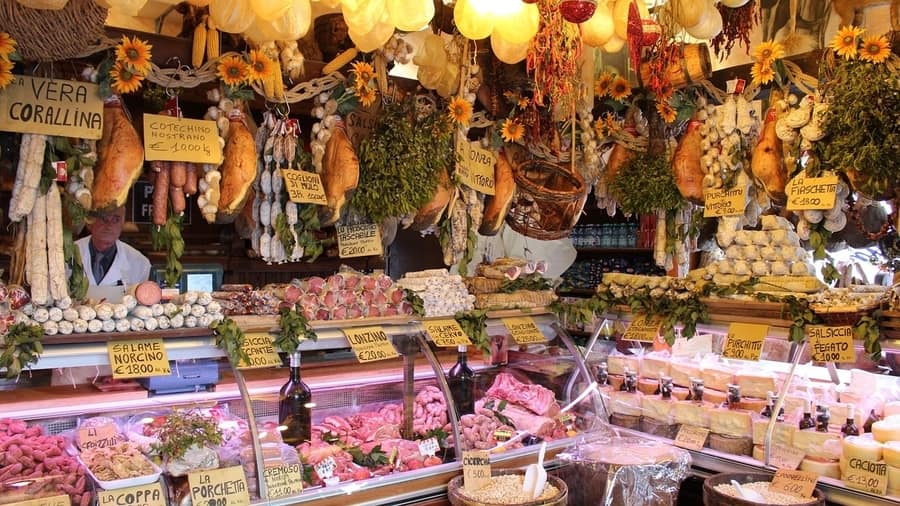
Classic Items for a Charcuterie Board
A good board shows technique and texture. I like to mix a couple of dry-cured whole muscles with something spreadable and one cooked or emulsified style. Then I add a few bright, acidic sides so the salty, fatty flavors stay lively from first slice to last.
Dry-Cured Whole Muscles
These are salt-cured, slowly dried cuts that slice paper-thin and showcase pure meat character. They’re the calm center of a board—simple, elegant, and full of aroma.
Prosciutto (e.g., Parma)
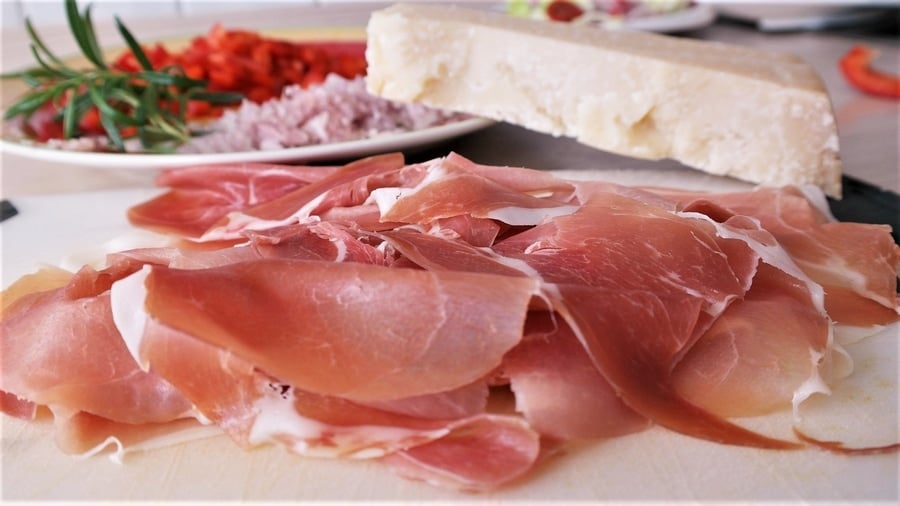
Bring it to room temperature before serving and slice as thin as you can manage. The melt and sweetness are the point; over-thick slices mute the experience.
Country / Iberian Ham, Coppa, Bresaola
Lean beef bresaola adds a darker, wine-friendly profile. Coppa (pork collar) balances spice and gentle fat. Country ham and Jamón Ibérico can be the “showpiece” if you want a single hero item.
Salami & Emulsified Meats
Salami brings fermentation and spice. You get tang, pepper, and the satisfaction of a firm slice that stands up to cheese and pickles. Emulsified or cooked styles like mortadella add a plush, even bite that contrasts nicely with drier meats.
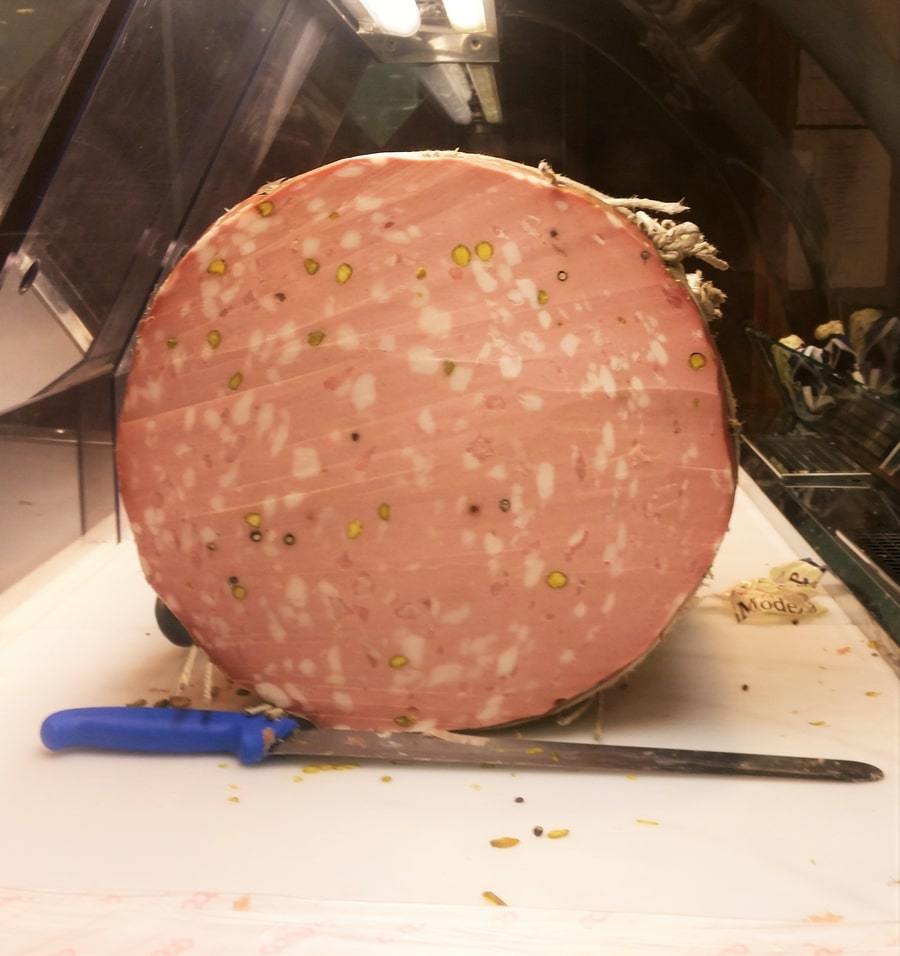
Mortadella with pistachios is a great “crowd-friendly” option. If salami is your mainstay, choose one classic style and one with a different spice profile so the board doesn’t feel repetitive.
For choosing specific salami styles and pairings, I’ve put together a detailed guide: Best salami for a charcuterie board.
Pâtés, Terrines & Rillettes
These are your spreadables. A coarse country pâté with peppercorns gives texture; a smooth mousse adds luxury; rillettes bring tender shreds bound with fat. They fill gaps on the board and change the rhythm between thin slices of cured meat.
Smart Accompaniments
Acidity and crunch keep palates fresh. I reach for pickled vegetables, olives, and a sharp mustard. Fruit (fresh or dried) adds sweetness to balance salt and fat, while nuts and good bread or crackers handle texture.
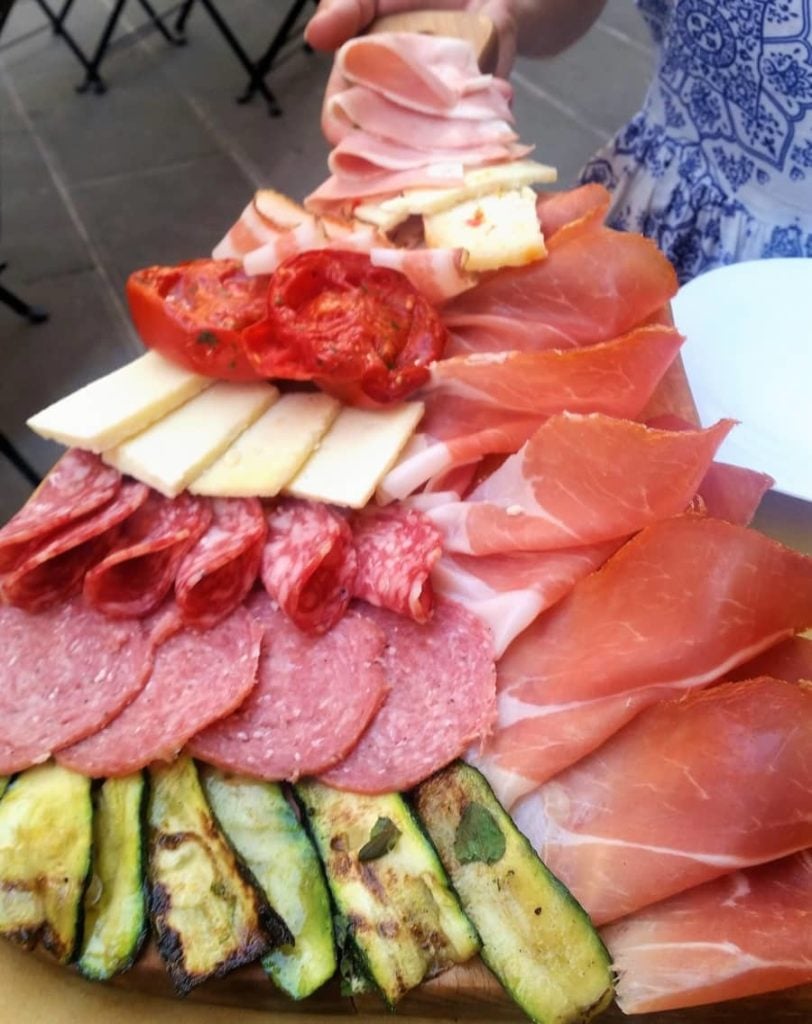
If you want a clear visual checklist of components and how they fit, here’s a photo-forward explainer: What goes on a charcuterie board (with pictures).
How Do You Say “Charcuterie”?
It’s commonly said “shaa-koo-tuh-ree.” I still get asked about this at tastings—here’s the quick clip I point people to:
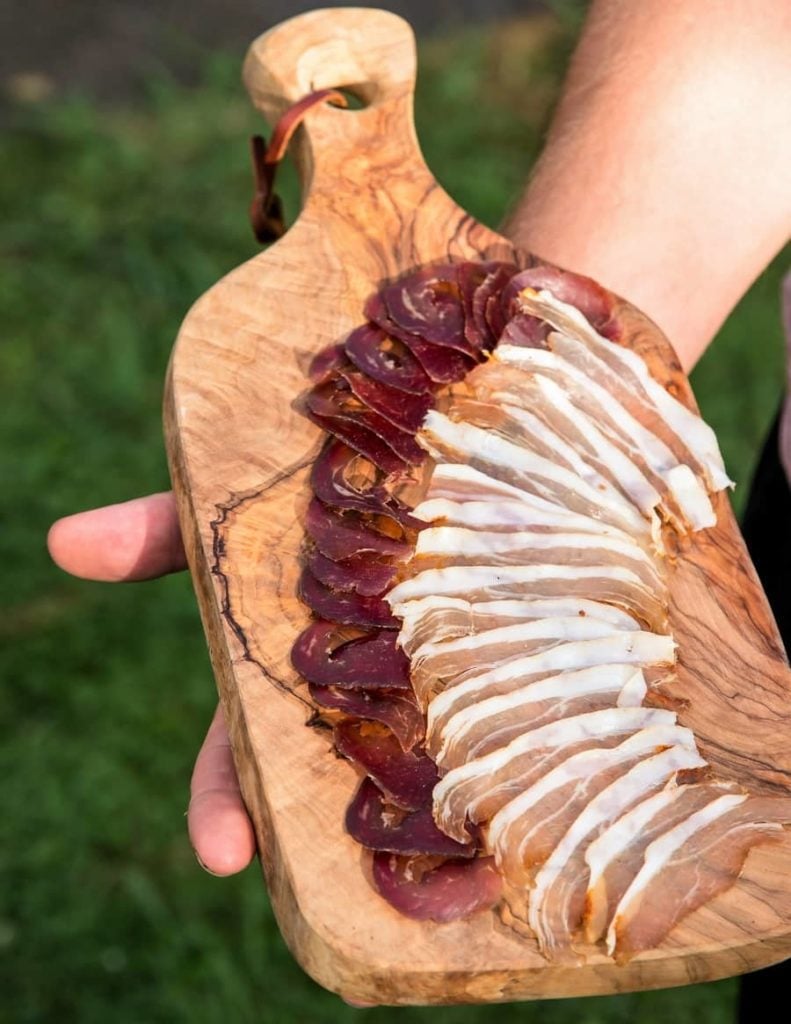
Quick Ways to DIY a Board at Home
You don’t need a deli counter or a cellar to build something memorable. A balanced board comes from mixing textures (silky, firm, spreadable), punctuating salt and fat with fresh or acidic sides, and slicing as thinly as you can. Below are the fast wins I use when I’m hosting but still want real craft on the plate.
Low-Effort, High-Impact Additions
Hot-smoked fish fillets. A small portion carries big aroma and breaks up all-pork boards. Flake a little into bites with mustard or horseradish and it goes a long way.
Quick-pickled vegetables. Carrot sticks, red onion, cucumbers, or fennel take on bite in minutes. That snap and acid refresh your palate between salty slices.
Dukkah or toasted nuts. Texture is underrated on boards. A bowl of dukkah lets guests dip bread or cap a bite of mortadella with crunch and spice.
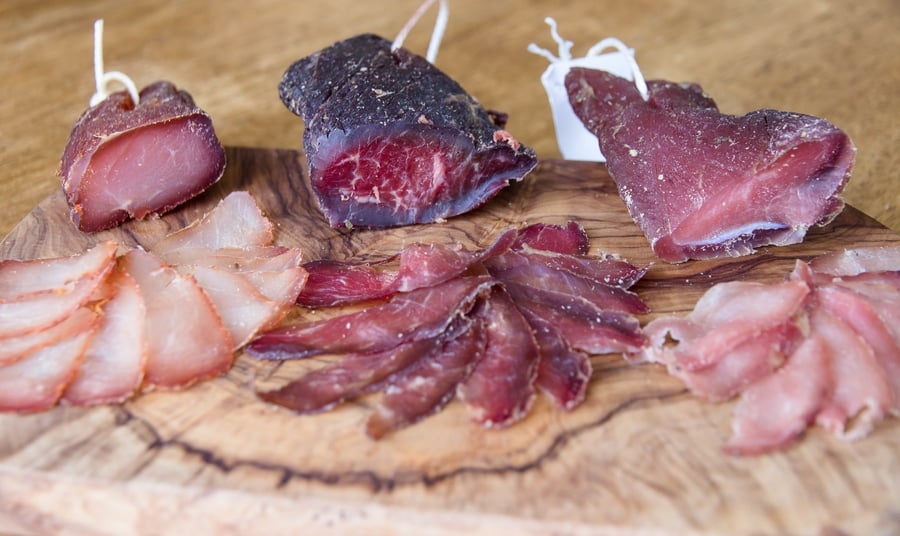
If you want to try a simple project that fits into normal life, my step-by-step fridge method walks through setup, airflow, and cut choice: How to cure meat in a regular fridge (no-mod guide).
Slicing & Serving Tips
Great charcuterie eats like a story in small chapters. You don’t need huge portions; you need the right cuts and order. Here’s the approach I use when setting the board down in front of guests.
Paper-Thin Slices & Room-Temp Serving
Wafer-thin slices unlock aroma and tenderness, especially for prosciutto, coppa, and bresaola. If you’re using a knife, angle the blade and take longer strokes—let the knife do the work rather than pressing down. For a full walkthrough of knife and slicer techniques (plus how to handle tricky shapes), see How to cut paper-thin slices of cured meat.
Set the meat out early. A little time on the bench lets the fat soften and the flavors bloom. Keep spreadables (pâté, rillettes) lightly chilled until serving so they hold shape, then let them loosen on the table.
Portion Planning & Make-Ahead
As a guide, I plan a mix of three meats (a whole-muscle, a salami, and something spreadable), then fill the rest with balanced sides—something acidic, something sweet, something crunchy. If you’re prepping in advance, arrange dry items first and add delicate slices last so they don’t dry out. I’ve detailed timing and storage choices here: Prepare a charcuterie board ahead of time.
Keep a small “reserve” of meat covered nearby. As the board thins out, refresh with a few neat stacks rather than dumping a pile—presentation matters for appetite. Rotate pairings as you go: a salty bite, then something bright, then something creamy. That rhythm makes a modest selection feel generous.
Make a Little of the Cured Meat Yourself
Even one homemade item changes the whole energy of a board. A small cured eye of round (bresaola-style) or a compact coppa adds pride and talking points. Start small, track the weight loss, and be patient—good charcuterie rewards attention, not stress.
When you’re ready, that same no-mod fridge approach can produce lean, tidy cuts in a few weeks with the right setup. It’s a satisfying bridge between store-bought classics and a board that reflects your own hands: How to cure meat in a regular fridge (no-mod guide).
History of Charcuterie (Short Overview)
Charcuterie began as thrift and technique—preserving meat so it could be enjoyed safely over time. Salt, fat, smoke, and gentle heat turned perishable cuts into foods with character and shelf life. Over centuries, those practical methods became a craft with distinct textures, aromas, and presentations.
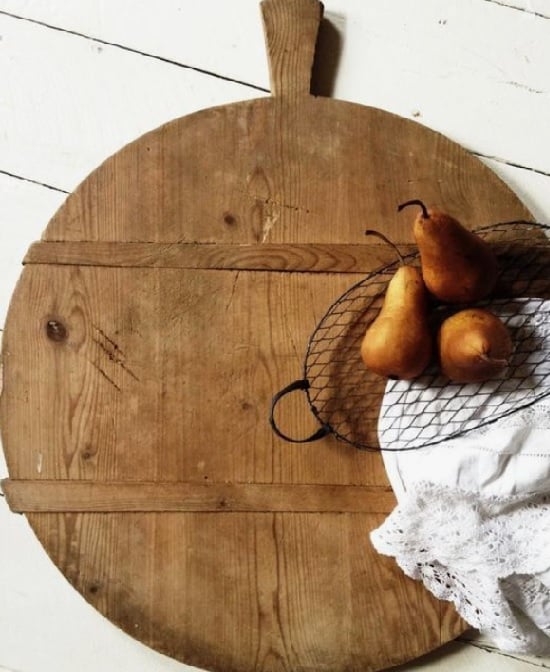
From Preservation to Pleasure
Before refrigeration, preservation came first. Dry curing, confit, terrines, and sausages meant families could stretch an animal through winter. As techniques refined, flavor and presentation took center stage and charcuterie moved from necessity to culinary pride.
France, Guilds & Technique
In France, specialized guilds formalized the work: selecting cuts, seasoning, fermenting, cooking, and presenting meats in many forms—firm, spreadable, or sliceable. The word itself points to the craft: char (flesh) + cuit (cooked). For a concise overview of the classical scope, see the encyclopedic entry on the subject (Charcuterie — Wikipedia).
Modern Boards & Global Influence
Today, the word “charcuterie” has widened to include flexible grazing boards. Italian salumi (whole-muscle cures and salami), Iberian hams, American country hams, and cooked or emulsified styles like mortadella all appear together. The format is social and visual—but the craft roots remain: thin slices, balanced flavors, and respect for the raw materials.
FAQ
Is charcuterie raw or cooked?
Both. Classical charcuterie includes cooked preparations (pâté, terrines, rillettes) and cured/air-dried meats (prosciutto, coppa, salami). The common thread is that they are prepared for serving—sliced thin or spreadable—rather than served as a raw steak.
What meats should I pick for a first board?
Choose one dry-cured whole muscle (e.g., prosciutto), one salami with a clean spice profile, and one spreadable item (pâté or rillettes). That trio gives you three textures and three flavor paths without overwhelming the table.
How much charcuterie per person?
As an appetizer: ~50–75 g (2–3 oz) total meat per person. As the main event: ~125–150 g (4–5 oz). Add breads, pickles, fruit, and nuts to balance salt and fat.
Do I have to include cheese?
No—traditional French charcuterie centers on prepared meats. Cheese is a welcome companion, not a requirement. If you include it, choose styles that won’t overshadow thinly sliced cured meats.
Got a favorite combo or a question about building your board? Drop it in the comments—I read every one.

Tom Mueller
For decades, immersed in studying, working, learning, and teaching the craft of meat curing, sharing the passion and showcasing the world of charcuterie and smoked meat. Read More
Your pronunciation is awfully American. In French, it’s only 3 syllables, none of them stressed.
Thanks for the tip, I’ll do some practicing, it’s with a New Zealand accent too!
It sure was interesting when you explained that charcuterie i visually appealing when placed on a platter and highlights forms of preservation or flavor enhancement. This is something that I will consider because I am planning to hold a birthday dinner party in two weeks. I want to ensure that my guests are going to feel excited when they see how the catering table is set, so your tips make sense to me.
Thanks its the pinnacle in crafting food in my eyes ! :} Tom
You didn’t mention the Italian word Antipasti. Italians don’t call it Charcuterie.
No I didn’t, 90% of the readers are from North America and Canada, hence why it’s a USA focus. Meat and Cheese board is another name for it. I like salumi board! Tom