
Cold smoking food has been a long-running obsession of mine, mostly because it sits right at the intersection of patience and craft.
I’ve worked my way through plenty of meats, but I’ve also had a lot of fun experimenting with dairy, vegetables, and even the occasional oddball project when I want a new flavor angle.
In traditional meat projects, cold smoking is often used as part of a longer preservation-style process, where curing and drying are doing the heavy lifting and the smoke supports the finish. With non-meat foods, I treat cold smoking as a pure flavor tool, since the goal is aroma, surface character, and complexity rather than a long-curing outcome.
When cold smoking happens in cool conditions, the food slowly dries while it takes on smoke. That combination is a big part of why this technique has been used for generations, especially for cured meats where texture and “keeping quality” are part of the end goal.
One of the most common questions I get when cured meat comes up is simple: “Is it cold-smoked?” It’s a fair question, because cold smoke can change how the meat smells, how it slices, and how it matures over time.
Preserving Role of Cold Smoking Food
Cold smoking is one of those older techniques that makes complete sense once you see it in action. Before modern refrigeration was normal, people leaned on a small set of repeatable methods: curing, drying, and smoke. The beauty is that you can still apply those same principles at home with far less equipment than most people assume.
When I first learned about cold smoking from a Dutch butcher, the setup was almost laughably simple. It was a large metal smokehouse and a pile of sawdust smoldering slowly, with plenty of airflow moving through the chamber. I remember thinking, “That’s it?” Then I tasted the results and stopped overthinking everything.
What stuck with me is that cold smoking is not one “magic step.” It’s a supporting method that layers aroma onto the surface while helping the outer layer dry in a controlled way.
When you combine that with proper curing and steady conditions, you get that unmistakable cold-smoked character people associate with traditional smokehouses across Europe.
What is Cold Smoking?
Cold smoking is exposing food to cool smoke for a sustained period without trying to cook it. For cured meats, it’s usually part of a longer workflow where salt-curing comes first, then smoke, then more drying. For dairy and vegetables, it’s typically a short session where the goal is simply getting smoke flavor to “cling” to the surface.
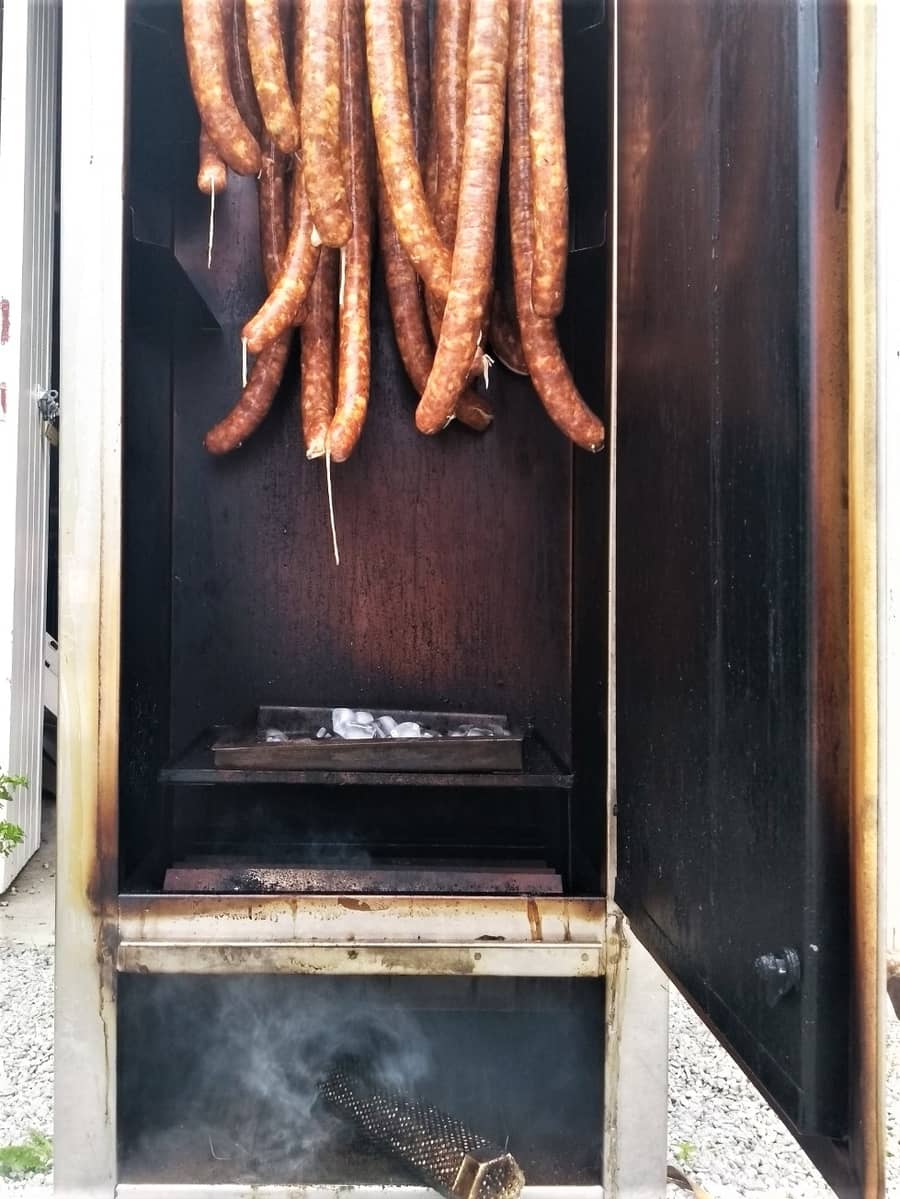
When I explain cold smoking to beginners, I keep it practical. You are building a steady, light stream of smoke, keeping it ventilated, and letting time do the work. The details below are the core points that always show up in successful projects.
- Use curing (usually salt-based) to start changing the surface and draw out moisture.
- Expose the food to cool smoke in a ventilated space so smoke can circulate and gently settle.
- Keep conditions steady enough that the food slowly firms and dries rather than sweating or warming up.
- Pay attention to temperature and humidity because they influence how the surface dries and how smoke sticks.
- For non-meat foods, treat cold smoking as flavor-only and keep sessions short so the smoke stays clean and pleasant.
I generally choose cool evenings for longer sessions, because the conditions are naturally more stable. Even when I only smoke for a few hours, the surface tends to firm up nicely overnight, and the flavor usually improves after a rest.
A big shift for me was realizing that humidity matters as much as temperature for cured meat projects. It was one of the clearest themes in Cured by Lindy Wildsmith, especially when she explored how commercial smokehouses treat airflow and moisture as part of the process.
What Makes Cold Smoking “Preserving” for Cured Meat
When people talk about cold smoking as preservation, what they usually mean is that it supports a drying-focused style of curing. The cure changes the meat, the drying changes the texture, and the smoke becomes the final layer that adds aroma and surface character. On its own, smoke is not the whole story, but it can be a meaningful part of a traditional workflow.
One useful way to frame it is to compare cold smoking to other traditional drying styles. If you’ve ever done dry curing meat at home, you already know the goal is controlled moisture loss over time. Cold smoke can sit alongside that goal by helping the outside of the meat develop that familiar smokehouse finish.
Historically, smoke and curing are often described together for a reason. Even a quick look at how older food processing is described shows smoking has long been used to support both flavor and preservation-style outcomes, especially when paired with curing and drying.
If you want the historical context in one place, Britannica has a straightforward overview of smoking as a preservation method and why it was adopted across different cultures.
Temperature and Humidity Targets for Cold Smoking
The moment conditions drift too warm, cold smoking becomes harder to control and the project starts to behave differently. I plan sessions around cool ranges, and I keep the setup simple: steady smoke, steady airflow, and enough time for the surface to change gradually.
I keep a reference on hand because it removes a lot of guesswork. The cold smoking temperature table is the quick check I return to when I’m deciding whether to smoke now or wait for better conditions.
Humidity matters most on cured meat projects where you want slow, even drying. When humidity is too low, the outside can dry faster than the inside, and you end up fighting the process instead of letting it develop naturally. When humidity is higher, the change tends to be more gradual, and the smoke has time to settle without the surface racing ahead.
For non-meat foods, I treat humidity as optional. Cheese, vegetables, chocolate, and cream can take on smoke flavor quickly, so you can focus on gentle smoke and short sessions. For those foods, the main skill is learning how to keep the smoke light so it stays clean and balanced.
Different Cold Smoked Foods
Different foods react very differently to cold smoke, especially once you give them time to rest after smoking. Cured meats tend to deepen and round out overnight, while dairy and vegetables can go from subtle to intense surprisingly fast. The categories below are the ones I come back to most often.
Cold Smoked Fish
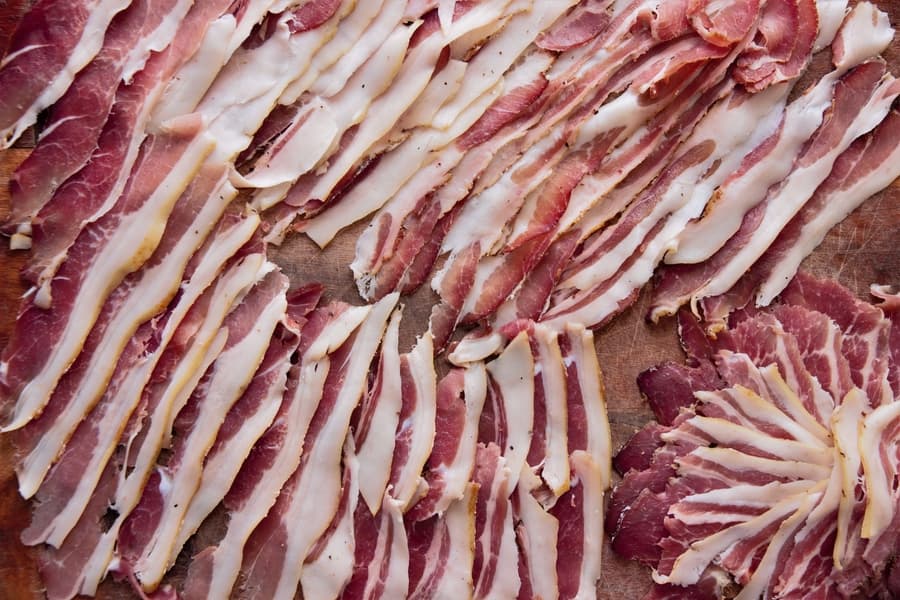
Fish is one of the fastest ways to appreciate what cold smoke does to texture and aroma. The surface takes on smoke quickly, and small changes in time and intensity show up immediately when you slice it. That’s why I treat fish as a “precision” category: short notes, small adjustments, and careful repetition until it matches what you like.
Cold Smoked Red Meat
I also experiment with red meat, especially when I want a deeper, more robust smoke profile. The cut, the fat content, and how much surface area is exposed all influence how quickly the smoke settles in. When I’m testing a new idea, I keep the first session lighter than I think I need and build from there.
Cold Smoked Vegetables
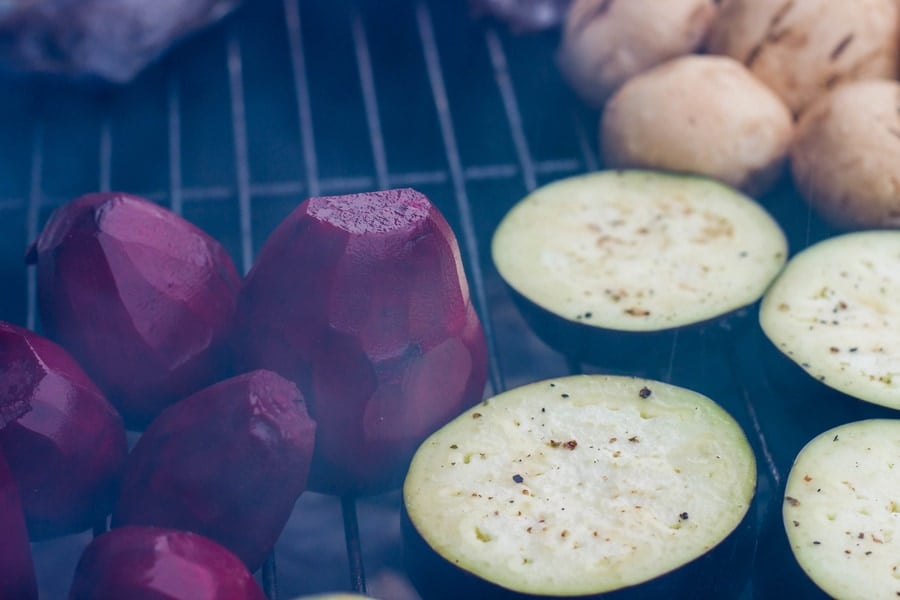
This is flavor-only for me, and it’s a great way to learn smoke control without a long project. Eggplant and beetroot are two favorites, especially when I lightly salt them first to pull some moisture to the surface. I also prefer lighter woods for vegetables, since heavier smoke can overwhelm quickly.
Cold Smoked Dairy
Dairy is where you really learn the “less smoke is better” rule. Cheese is the obvious starting point, but cold-smoked cream can be brilliant when you fold it into a dish that carries the aroma through. When I’m testing something new with dairy, I keep the session short and let it rest in the fridge so the smoke settles evenly.
Cold Smoked Dry Cured Salami
Salami projects can handle repeated, lighter smoke sessions, which is where cold smoking becomes a pattern rather than a single event. I’ve had great results building smoke slowly over multiple sessions, especially when I’m using a spice-forward recipe. The big win is consistency: the same setup, the same intensity, and notes on what changed between sessions.
Cold Smoking at Home: Options That Work in Real Life
To cold smoke at home, you mainly need two things: a steady smoke source and a chamber that lets air move through. I’ve used everything from a gas grill with a hood to simple DIY builds, and the best setups all share the same trait. They make it easy to keep the smoke gentle and consistent without babysitting the fire.
For a simple approach, pellet tubes are hard to beat. Once you understand how a pellet tube smoker works, it becomes a reliable tool you can drop into a grill or smoke box setup, especially for shorter flavor sessions like cheese and vegetables.
If you prefer building your own setup, I keep a running list of DIY cold smoker ideas that cover everything from basic vented boxes to more permanent smokehouse-style builds. It’s a helpful place to compare designs without getting lost in overly complicated plans.
When I want the most control, a smoke generator wins because it lets me adjust output to match the chamber size and the food I’m smoking. I’ve written up my experience in a Smokai smoke generator review, mainly because repeatability becomes much easier when you can fine-tune airflow and smoke density.
One rule I stick to across every setup is simple: lighter smoke almost always tastes better. When smoke is too heavy, it tends to sit on the surface in a harsh way. Start with a shorter session, let the food rest, then decide whether it needs more.
For a solid practical walkthrough that matches a lot of home setups, Food & Wine has a useful guide on cold smoking at home on a grill. It’s a good reference when you want a mainstream overview that still respects the basics.
How to Cold Smoke Meat
For cured meat projects, I treat cold smoking as a sequence rather than a single step. You cure first, then smoke under the right conditions, then let the meat rest and dry between sessions. That pacing lets the surface develop slowly instead of forcing it into one long, heavy smoke.
Here is the simple workflow I follow when I want a repeatable result at home.
Step-by-step workflow
- Fully cure the meat using your preferred method (salt box, brining, or equilibrium curing).
- Choose conditions that support cool smoking and steady surface drying.
- Generate gentle smoke and let it circulate through a ventilated space.
- Rest and dry between smoking sessions to let the surface settle and firm.
- Continue until the texture and firmness match your target and the smoke profile tastes balanced.
Frequently Asked Questions
These are the questions I hear most often from people starting out. The short version is that cold smoking is a craft of steady conditions, light smoke, and repeatable sessions.
How does cold smoking support preservation-style cured meat projects?
In traditional projects, curing and drying set the foundation, and cold smoke supports the finish. The smoke adds aroma and surface character while the cool conditions encourage gradual firming and moisture loss over time.
What is the best temperature range for cold smoking?
I plan cold smoking around cool conditions so the food does not warm up and the smoke stays clean. As a practical range, many home sessions land roughly in the 10–30°C (50–86°F) window depending on the project and setup.
How long should you cold smoke cheese or vegetables?
For flavor-only foods like cheese and vegetables, short sessions are usually enough to get noticeable aroma. I prefer starting light, letting it rest, then deciding whether it needs another brief session rather than pushing heavy smoke all at once.
Why does cold-smoked food sometimes taste harsh?
Most harshness comes from too much smoke density or smoke that is not burning cleanly. I get better results with a gentle stream of smoke, good airflow through the chamber, and shorter sessions that build flavor gradually.
What have you cold smoked recently, and what setup did you use? Drop a comment with what worked, what didn’t, and what you want to try next.
Tom Mueller
For decades, immersed in studying, working, learning, and teaching the craft of meat curing, sharing the passion and showcasing the world of charcuterie and smoked meat. Read More
Thank you for a nice article.
In what ideal conditions do you store the meat after it have been cold smoked?
I am especially interested in how this is done without electricity, as in the old days.
Well, I think back in the day the saltiness was WAY higher so the meat was heavily cured therefore tolerated higher temps. I would be guessing, but generally curing/cold smoking for preservation was of course autumn/winter. Depending on geography of course.
Personally I don’t like over 77-83°F/20-23°C
Also, my new trick is vacpac with reuseable bags, they have a manual valve. You use a basic pump and suck out all the air (vacpac but reuseable). Then I stick the bag in the curing chamber which is always around 55°F/12°C
Hey Tom, if I am going on a backpacking trip would it be feasible to bring smoked Slovenian sausage and pork as a quick and easy source of protein and fat? Temps on the trip can range from 40-85 Fahrenheit. The meat would be dry kn weatherproof bags. Thanks and thanks for all the knowledge!
Hey Eric, depends on how its smoked? Smoked hot ie. cooked with smoke or cold smoked/dried – cold smoked I would take on a trip. ‘dry cured’ means the moisture has been taken out so the bacteria find it hard to spoil it. Biltong or jerky would be other alternatives which are dried a lot and biltong uses vinegar to denature (cook) the meat as well 🙂 Happy hiking! Dry Cured Bacon is popular when I go hunting. Lastly, you aren’t carrying the ‘water’ weight as well!
Hi Tom. I’m really enjoying reading your articles – thanks so much for posting your knowledge. I do have a question which has been bothering me for a while about cold smoking bacon though. Once cured, is there a maximum temperature and period of time the bacon should be exposed to within the chamber? Obviously the overall HACCP guidelines dictate that certain foods such as raw, un-dried meat should be essentially kept below 4C/39.2F at all times, so it would be great to know how this becomes acceptable in a cold smoking environment. Many thanks!
I’ve never done anything commercial, just 20 years of at-home curing. The books I’ve read and the professionals I’ve talked to say under 15C works for them. Officially they say cold smoking is under about 30C (I believe fish starts to cook above this temp, I guess slowly….).
I prefer when cold smoking cream, milk or meat to be under about 15C. Humidity plays a part too with meat or dry cured cold smoked bacon! Cheers T
Thanks Tom. I used to do salmon quite comfortably around 22C and bacon too and it all seemed fine. I have the Mariansky books amongst many others and whilst there is guidance on the subject it is a bit scant, but as you suggest the lower the better really. I’m in the UK, so cold smoking at night and therefore below 15C is possible for a big chunk of the year. Thanks once again. J
nice one, I agree completely. Don’t agree with all things in the Marianski books, but most of it is on point! But they are definitely a fully credible resource. I’m the same in New Zealand, night-time or winter (10-15C daytime). Humidity with meat is key!
Hi Tom,
I cold smoked 2 pigs last winter. heavy salt cure first. I live in midcoast Maine and followed a youtube of an old guy in Kentucky who hangs his meat for years before eating. My hams have been hanging and we’ve eaten up the bacon mostly, now cutting into a ham.
Two questions:
1. We have larder beetles on some meet. The hams were glazed with cayenne and molasses and sugar rub. not stopping the beetles. Do you think rubbing a thick layer of lard or oil would help? Also cut out infected meat?
2. Preserving longer? I am hanging them in my smokehouse which in Maine goes from -5 to 100 F possibly. Kentucky would be about the same according to the old timer on youtube. I have a root cellar. Humidity is about 60-80% year round. this time of year it is 80. Is it a bad idea to store them in there? Maybe vacuum seal?
Thoughts?
Thanks, I love your articles.
PS. there is a local old timer who is 90 who recently pulled lardo out of a brine barrel that was 20 y.o. He replaced the brine every year but then forgot to do it for the previous 3 years. Found the barrel one day and said, “if I’ll be darned.” then had the lardo for lunch. Still good.
Hey Steve,
Thanks for the comment, wow lots going on!
I have never experuenced larder bettles, I dry meat in a DIY curing chamber – wrote a post on that here. For me equilibrium curing and using a controlled curing chamber fridge helps me achieve more consistent outcomes.
1. If I had bug problems, I would cold smoke more (smoke has antibacterial/antifungal properties too)
2. A big variation in temp is far from ideal, you need to keep it ideally well under 68°F/20°C – under 60°F, again this is why controlling the environment in a fridge works (I’ve also had 1000 Gallon commerical fridges converted before which could easily handle 2-3 pigs (I use wild venison alot).
If I were to vacpac, then I would keep at regular fridge temp, say 35°F/3°C – that’s how I store long term for dry cured or cold smoked goods (if you have mold on the outside ideally get rid of it before vacpac with vinegar.
Too many variables and I have no idea about yr complete setup, but if muscles are covered with skin, this can help protect the meat if keeping in a root cellar. The root cellar sounds better then the smoke house 🙂
Again, I can’t really comment alot when guys go down traditional methods, since there are many variations – I am now exclusively using equilibrium curing and controll the environment as mentioned.
All the best,
Tom