

Salami is cured meat, but that doesn’t mean it lasts forever. How long salami lasts depends mostly on two things: whether it’s whole or cut, and where you store it.
Whole dry-cured salami is preserved and continues to slowly dry over time. Cut or sliced salami, however, is exposed to oxygen, and oxygen dramatically shortens its usable life.
The whole dry-cured salami is preserved and will continue to dry. When refrigerated, it will become harder and drier. It can last about six weeks when unrefrigerated. However, cut salami lasts about 1week in the refrigerator.
Commercially made salami that’s made in under a week rather than dried for months will perish a lot faster.
From years of making, hanging, slicing, and teaching salami curing, I’ve found those timelines are a starting point — not a fixed rule. Salt levels, fermentation, acidity, packaging, temperature, and light exposure all affect how long your salami stays enjoyable.
Summary:
- Salami’s shelf life varies depending on whether it’s whole or cut and how it’s prepared.
- Whole dry-cured salami can last longer than cut salami, typically about six weeks unrefrigerated
- Cut salami lasts 1-2 weeks in the refrigerator.
- Salami’s shelf life is mainly due to the preservation effects of salt and acidity; it varies greatly.
- Note that some commercial salami takes 5 days to make, salami can take months to make, and is a preserved product with a shelf life.
- Oxygen exposure affects salami, causing discoloration and spoilage, particularly in cut salami.
- The shelf life of sliced salami can be extended by avoiding direct light exposure and using N2 packaging.
- Dry-cured salami (I wrote about different salami ideas also for pizza types) can last months if stored properly, while cooked salami has a shorter shelf life.
- Signs of spoiled salami include gray edges, black fuzz, foul odors, and abnormal texture.
- White mold on salami is typically harmless but should be removed before consumption if present.
Fridge vs Room Temperature – Quick Comparison
| Type of Salami | Room Temperature | Refrigerated | What Changes First |
|---|---|---|---|
| Whole dry-cured | Several weeks (cool, dry place) | 1–2+ months | Becomes firmer and drier |
| Cut dry-cured | Not recommended long-term | 1–3 weeks | Edge greying and dryness |
| Sliced packaged | No | 1 week once opened | Oxidation and light discoloration |
| Cooked / hot-smoked | No | 4-7 days | Spoilage similar to cooked meat |
This difference exists because oxygen is the biggest factor once salami is cut. Whole salami retains protection from its casing. Once sliced, oxygen begins breaking down fats and pigments, leading to discoloration and faster spoilage.
Some salami are not fermented and dried for preservation. Often, rapid acidification is used; once the plastic is removed from this type, it will last 1-2 weeks in the fridge.
The longevity is mainly due to salt and acidity changes; not all salami are made the same – there are literally thousands of variations.
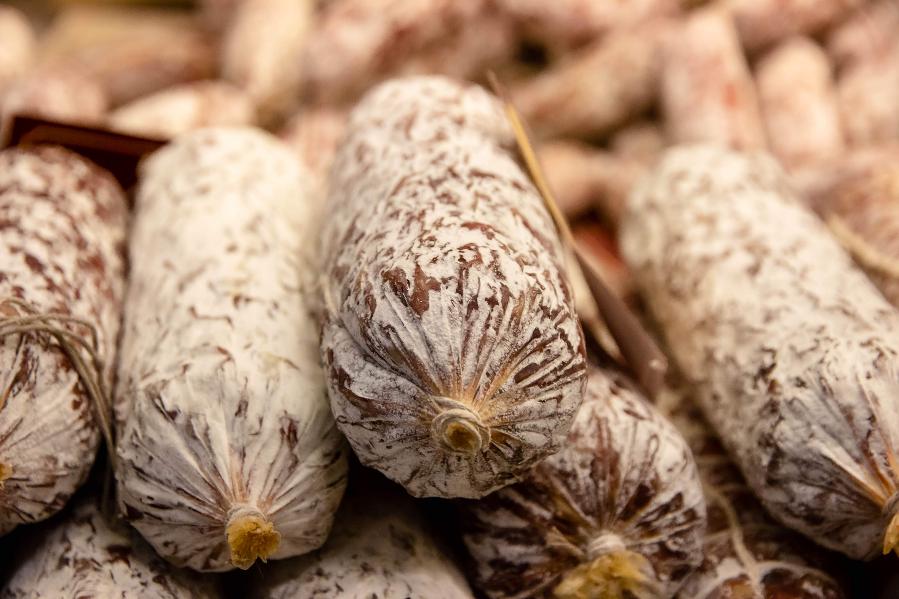
For everyday grocery shoppers, cut and whole salami need to be understood differently before buying. The structure changes once it is sliced, and that changes how long it lasts.
There is also an important distinction between dry-cured salami and cooked or hot-smoked salami — which affects shelf life significantly.
Salami & How Long It Lasts
Oxygen is both helpful and destructive when it comes to food.
With cured meats like salami, oxygen exposure is the turning point. Whole salami continues to slowly dry, which simply makes it firmer over time. Cut salami, however, begins oxidizing immediately. This is what causes grey edges, dull coloring, and eventually off smells.
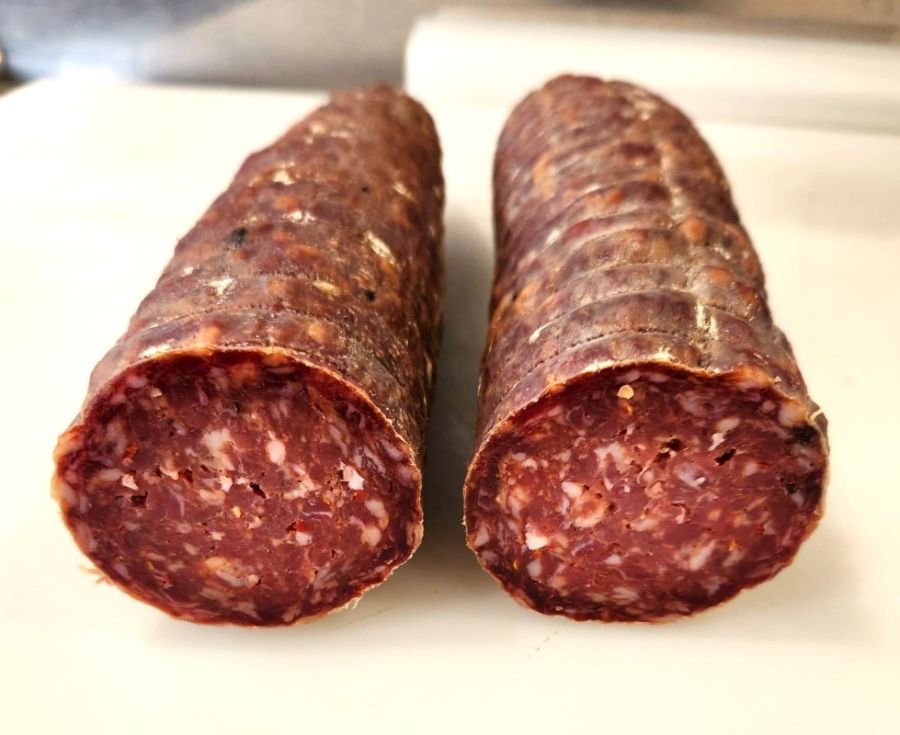
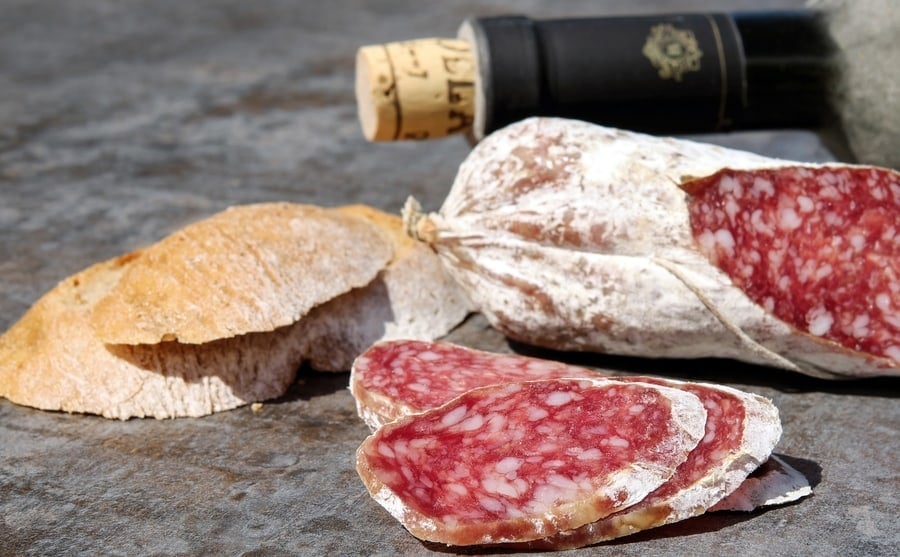
When picking up sliced salami, you want to see a healthy reddish-pink interior. Artisan slow-fermented salami can darken slightly as it dries, but it should not look patchy, slimy, or heavily greyed on the edges.
Here is an example of this:
Another example of well-made, properly dried salami:
Many shoppers hesitate when they see grey or brown tones in packaged sliced salami. In most cases, this discoloration is caused by residual oxygen inside the package combined with light exposure in display cabinets.
Lighting plays a major role. Photooxidation can dull the vibrant red color of salami even if it is still technically safe. This is common with commercial sliced products under bright supermarket lighting.
Some commercial salami is produced very quickly and is not dried in the traditional sense. Instead, rapid acidification lowers the pH, making it safe for consumption without long drying. Once opened, these types should always be treated like cooked meat and refrigerated.
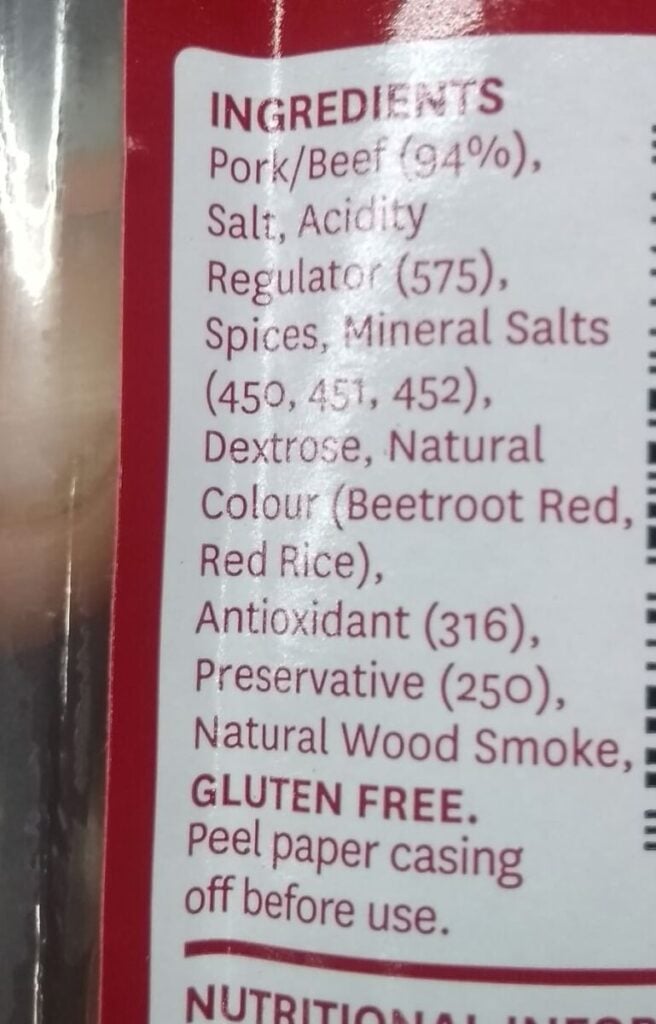
In contrast, traditionally fermented and dried salami — especially the type I’ve made and seen throughout Europe — can often be found sitting unrefrigerated in markets, particularly in Italy. These products rely on proper salt levels, acidity, and controlled drying for preservation.
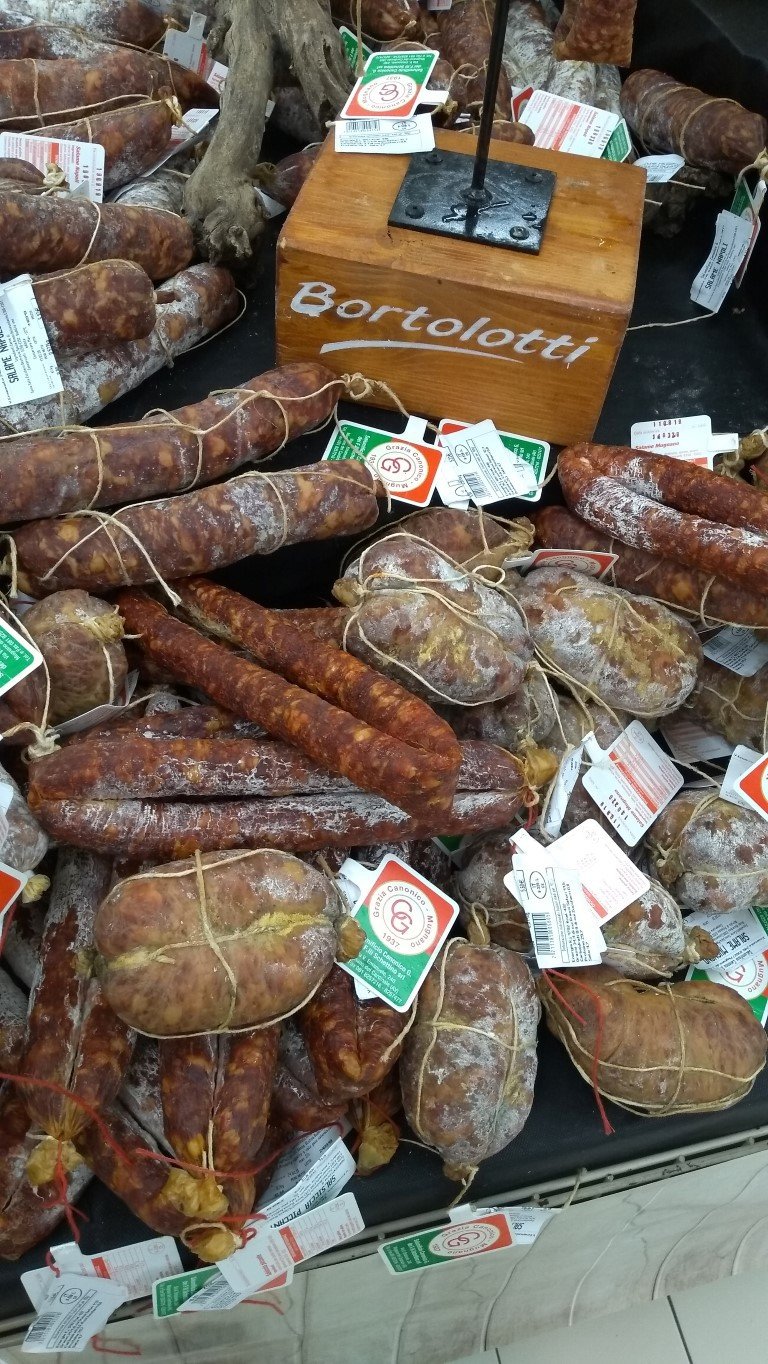
Understanding whether your salami is truly dry-cured or simply acidified and packaged makes a big difference in how long it will last once you bring it home.
Ways to Avoid Salami Exposure to Oxygen
Although whole salami is naturally protected by its casing, sliced salami is immediately exposed to oxygen. That exposure is what accelerates discoloration, drying, and eventually spoilage.
If you want cut salami to last as long as possible, reducing oxygen and light exposure is the priority.
- Keep sliced salami refrigerated once opened.
- Store it in an airtight wrapping or a well-sealed container.
- Avoid direct overhead refrigerator lighting when possible.
- Keep it away from warm, fluctuating temperatures.
Salami stored away from bright white display lighting generally holds color and texture better. Light accelerates photooxidation, which dulls the red pigment and can make the product look older than it actually is.
Instead of standard vacuum-sealed packaging, some producers use N2 packaging. This system replaces oxygen inside the package with nitrogen, dramatically slowing oxidation.
Oxygen encourages breakdown and bacterial growth. Nitrogen, on the other hand, creates a stable environment that reduces rapid spoilage. That is why nitrogen-flushed packaging is commonly used for sliced deli meats and snacks.
Dry-cured Salami vs Hot Smoked (Cooked) Salami
There are two very different types of salami on the market: traditional dry-cured and hot-smoked (cooked). They behave differently once opened.

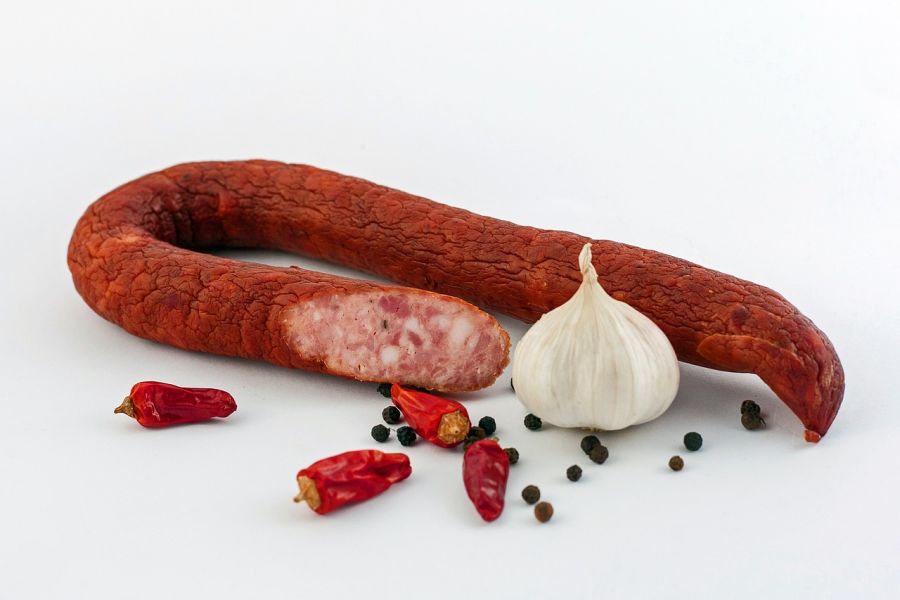
Dry-cured salami is fermented, salted, and slowly dried. It can last months when whole because preservation comes from salt, acidity, and moisture reduction.
Hot-smoked or cooked salami is heat-treated. Once opened, it should be treated like other cooked meats and kept refrigerated. Its shelf life is shorter and more dependent on cold storage.
Dry-cured salami (before being cut) can hang for extended periods until it becomes overly firm. Artisan or homemade salami can often be stored at moderate temperatures if properly dried.
How to Tell if Salami Has Gone Bad
Cured meat can be trickier than fresh meat to judge for spoilage, but there are clear warning signs.
- Gray edges spreading inward on sliced salami.
- Black fuzz or unusual mold growth.
- Strong ammonia or rotten odors.
- Excessive sliminess or abnormal texture.
White powdery mold on traditional dry-cured salami is usually beneficial and part of the fermentation process. It should smell earthy or mushroom-like. If it smells unpleasant or looks unusual, discard the product.
If salami smells strongly sour, rotten, or chemically sharp, it is best to discard it. Texture changes such as excessive slime or extreme hardness beyond normal drying are also indicators.
Trust your senses. Color, smell, and texture together give you the clearest answer.
How long does whole salami last?
Whole dry-cured salami can last several weeks at cool room temperature, and one to two months in a moderately cool environment. Because it continues to slowly dry, it often becomes firmer over time rather than spoiling immediately.
How long does cut or sliced salami last?
Once salami is cut, it should be refrigerated and typically lasts one week. Exposure to oxygen shortens its shelf life, especially for pre-sliced deli salami.
Can salami be stored at room temperature?
Traditional dry-cured salami can be stored at cool room temperature while whole. However, once sliced, it should be refrigerated to slow oxidation and spoilage.
How can you tell if salami has gone bad?
Signs of spoiled salami include spreading gray edges, black fuzzy mold, strong ammonia or rotten smells, slimy texture, or unusual discoloration. White powdery mold on traditional dry-cured salami is usually normal and can be wiped off.
Is white mold on salami safe?
White, powdery mold on traditional dry-cured salami is typically beneficial and part of the drying process. It should smell earthy or mushroom-like. If the salami is black, green, hairy, or smells unpleasant, discard it.
Can you freeze salami to make it last longer?
You can freeze salami, especially sliced or cut salami, to extend its shelf life. For the best texture, wrap tightly to prevent freezer burn and thaw slowly in the refrigerator before eating.

Tom Mueller
For decades, immersed in studying, working, learning, and teaching the craft of meat curing, sharing the passion and showcasing the world of charcuterie and smoked meat. Read More
My salami is in my fridge over a year. A green colour and still yummy. I think it’s ferment processed in the shop.
cool! trust your nose and eyes I say