
Pork is one of the main types of meat you can use for bacon.
But it is not the only option.
There are many different meats and styles, and the cut you choose changes the texture, fat balance, and how “bacon-like” the final result feels.
I have been making bacon from farmed and wild meat for over 20 years.
I have tried a wide range of methods and styles, and the biggest takeaway is simple.
You can create a strong bacon-style result with more than one animal, as long as you choose a cut that carries enough fat and cures well.
Smoke flavour is a key component of what most people call bacon (also the salty sweetness).
There are also ways to build that smoked character even when you are not using a full smoker setup.
For any type or style of bacon, there is generally a proportion of fat.
There are exceptions, but in most cases, fat is what makes bacon feel like bacon when you slice and cook it.
One classic exception is Canadian bacon.
It is mainly made from the pig’s loin and is often trimmed to have only a thin layer of fat around the outside.
In this guide, I will break down the main pork cuts people use for bacon, plus other animals and cuts that can work well.
In summary, the meats you can use for bacon:
Pork is the main meat used to make bacon, often from the shoulder, belly, or loin. Other meats that can be used to make bacon with some fat are lamb, beef, and turkey.
What Meat to Use for Bacon
Pork is by far the main meat used for bacon.
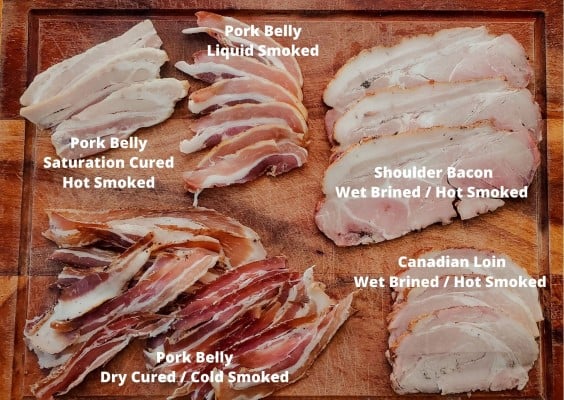
Below is a simple table showing the most popular bacon styles, the parts of the pig they come from, and what you can use.
| Bacon Type | Cut |
| Streaky Bacon | Pork Belly |
| Shoulder Bacon / Wiltshire | Shoulder |
| Canadian Bacon | Loin |
If you want a quick visual reference for common pork sections, this chart is handy for matching names to areas.
Different Options for Making Pork Bacon
In most of the Western world, bacon is usually made from pork belly, shoulder, or loin.
These are popular because they slice well and deliver a familiar balance of lean meat and fat.
There are other cuts used to make slightly lesser-known but still popular types of bacon in different countries.
Collar bacon
This cut comes from the neck and shoulder area.
It often has a fat curve on the outside, which can give you a rich slice once it is cured and cooked.
British Back Bacon
This is a combined loin-and-belly cut that gives you a larger slice with two textures in one.
Specific butchery is often used to take this cut cleanly, especially when you want neat, repeatable slices.
Many Sections of Pork Can be Used
Most cuts of pork contain some fat, but the amount varies widely by animal and cut. Especially due to some fat being intramuscular and some being separated and more visible from the meat (ie, backfat).
Age, diet, breed, and how the animal lived can all change the final fat ratio.
Here is a practical list of pork cuts suitable for bacon-style curing, arranged from the front of the pig to the back.
Pig Cut Muscle Options for Making Bacon:
| Cut | Area of Pig | Fat Amount |
| Jowl | Above the Cheek below the jawline (Italian Guanciale cut) | 30-50% |
| Shoulder/Forequarter | Outside of the Belly Area | 20-35% |
| Pork Belly | Outside of Belly Area | 30-70% |
| Loin | On either side of the Spine | 10-20% |
If you want the foundations before you choose a cut, this guide on how to dry cure meat lays it out step by step.
Beef Bacon
Beef bacon can work extremely well when you choose a cut that has enough fat and a good grain for slicing.
The animal’s age, breed, and condition all affect how fatty a cut will be.
Short ribs, chuck, or beef belly are common starting points because they often have a generous layer of fat.
If you want a simple reference for where “plate” and “short ribs” sit, this overview of beef cuts is a helpful cross-check: basic beef plate cut reference.
Lamb Bacon
Lamb belly is the obvious main area of focus.
It can produce a bold, rich slice when cured and cooked, especially if the belly has a clean fat-to-lean balance.
Lamb shoulder can also work when it has enough fat, though the slices tend to vary in texture.
Turkey Bacon
Turkey bacon is often positioned as an alternative to pork. In commercial settings, you often see two styles. One style uses ground or minced meat that is formed into strips.
The other style uses turkey thigh as the main muscle. I have often smoked turkey breast, but not thigh.
Most of my experience here has been with wild turkey rather than farmed, and the texture can be quite different when the fat content is lower.
Can You Make Bacon from Other Cuts of Meat
Absolutely.
I have used all sorts of odd cuts to make bacon, and it usually comes back to the same factor.
You need a cut that has enough fat to taste right and cook well.
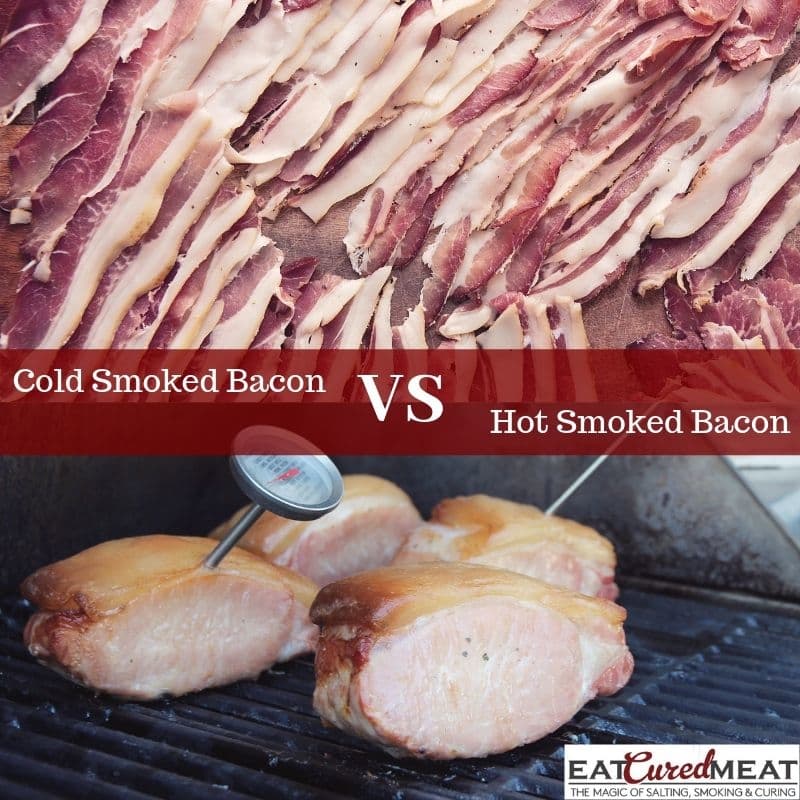
If you are deciding how you want to add smoke, this comparison of cold smoked vs hot smoked bacon will help you choose the right approach.
What Kind of Meat is Commerical Bacon Made From?
Mainly pork.
Traceability and cut choice vary a lot depending on the producer, but the baseline is still the same.
Most commercial bacon is built around belly, loin, or shoulder, because those cuts scale well and deliver the familiar “bacon” balance people expect.
I also think a lot about what I am going to put into my mouth.
Which Cut of Meat is Best for Making Bacon
That is up to you.
“Best” depends on what you want the bacon to do.
If you want crisp streaky slices, belly is hard to beat.
If you want a leaner, sandwich-style slice, loin-based options may suit you better.
If you want bold, rich flavour, shoulder cuts can be very satisfying.
Definition of Bacon
Salt cured with a dry or wet cure, then either smoked with heat or cold smoked and dried. These are the methods used to make all types of bacon.
If you want a simple reference for what most people mean by the word, here is a basic definition of bacon.
In practice, bacon is first salted to build the core flavour.
In more modern styles, sugar or another sweetener is often used alongside salt because pork and bacon pair well with a touch of sweetness.
Then it is given the smoke character.
As someone who smokes many different types of bacon and uses many different types of wood, I have found wood choice can shift flavour more than most people expect.
Fruit woods tend to give a lighter smoke character, not so commonly used for bacon.
Oak, beech, and hickory can push a deeper, heavier profile.
If you are cold smoking for the first time, this cold smoking temperature table makes it easier to plan your session without guessing.
As an example, pancetta is dry-cured and then dried.
It uses pork belly, but it is built around spice, drying, and slicing rather than a smoked bacon
profile.
Pancetta is Not Bacon
One way to offend an Italian is to call pancetta bacon.
Pancetta is made from pork belly, but it is spiced a certain way and dry-cured.
After curing, it is typically dried rather than smoked.
It is often appreciated sliced wafer-thin for antipasti, or cubed and cooked for pasta and stews.
What meat can you use for bacon?
Pork is the most common meat for bacon, typically from belly, shoulder, or loin. You can also make bacon-style cures from other meats like beef, lamb, and turkey when you choose a cut with enough fat and good slicing grain.
What cut of pork is best for making bacon?
Pork belly is the classic choice for streaky bacon. Pork loin is common for leaner styles like Canadian bacon, and pork shoulder can produce a richer slice with a different texture.
Is pancetta the same as bacon?
No. Pancetta is usually made from pork belly, but it is typically spiced and dry-cured, then dried. Bacon is defined by curing and a smoked style profile, which can be done with heat or cold smoking depending on the method.
Can you make bacon without a smoker?
Yes. You can build a smoked-style bacon profile using simple smoke tools like a pellet tube, or by using liquid smoke lightly alongside a well-chosen cut and a solid cure.
What meat have you used for bacon, and which cut gave you the best result? Share what you tried in the comments.

Tom Mueller
For decades, immersed in studying, working, learning, and teaching the craft of meat curing, sharing the passion and showcasing the world of charcuterie and smoked meat. Read More