

Yes, prosciutto can go bad. Even though it’s salt-cured and air-dried for many months, it’s still pork. Preservation slows spoilage dramatically — it does not stop it forever.
How quickly prosciutto goes bad depends mostly on one thing: whether it’s sliced or whole. Once oxygen reaches the meat, the protective drying process begins to work against it rather than for it.
After decades of making and storing prosciutto myself, I’ve seen whole vacuum-sealed pieces stay excellent for years. I’ve also seen deli-sliced packs turn unpleasant in less than a week. The difference is exposure.
This guide focuses specifically on how prosciutto goes bad, what causes it, and the clear signs you should look for before eating it.
Why Prosciutto Still Spoils
Prosciutto is preserved through salt and controlled drying. Over 12 to 36 months, moisture reduces and salt concentration increases. This creates an environment that slows harmful bacterial growth.
However, once cut open, several things begin to change:
- Oxygen exposure: Fat begins to oxidize, which affects flavor and aroma.
- Moisture imbalance: The surface can either dry excessively or become tacky.
- Temperature fluctuation: Repeated warming and cooling accelerate breakdown.
- Handling: Sliced prosciutto has a significantly greater surface area.
Whole prosciutto is protected by its exterior fat layer and rind. Once that natural barrier is removed through slicing, deterioration speeds up quickly.
Whole vs Sliced Prosciutto: What Changes?
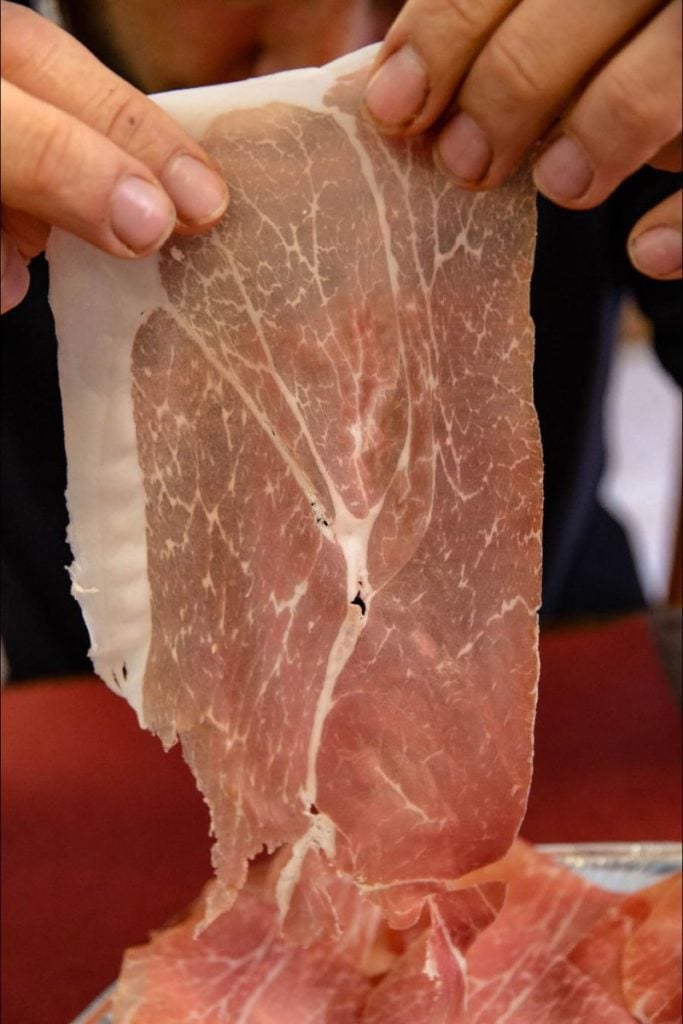
The difference between whole and sliced prosciutto is dramatic. Below is a practical comparison based on real-world storage experience.
| Form of Prosciutto | Typical Fridge Life | Main Risk Factor | How It Usually Goes Bad |
|---|---|---|---|
| Sliced (opened pack) | 5–7 days | High oxygen exposure | Drying, oxidation, slime, sour smell |
| Sliced (unopened vacuum pack) | Until use-by date | Seal failure | Sour smell, gas buildup, discoloration |
| Whole chunk (vac sealed) | 6–24+ months | Temperature fluctuation | Slow oxidation or excessive drying |
| Whole leg (bone-in, sealed) | Up to 12 months unopened | Humidity imbalance | Surface mold issues or hard drying |
| Frozen (any form) | Months to years | Texture degradation | Texture damage, muted flavor |
In my own curing chamber experiments, vacuum-sealed whole muscles have easily gone two years without spoilage. Once opened, though, the clock starts ticking — sometimes surprisingly fast.
Freezing works in terms of safety, but texture suffers. Don’t like freezing such a fine product that has taken months to dry.
Does Prosciutto Go Bad or Just Dry Out?
There’s an important distinction here. Often, prosciutto doesn’t “rot” — it simply dries too far.
When dehydration goes too far, the texture becomes leathery or crumbly. The fat loses its creamy texture and can develop a stale flavor. It’s not necessarily dangerous, but it’s no longer enjoyable.
True spoilage, on the other hand, involves unpleasant smells, slime, discoloration, or abnormal mold growth. That’s when it’s time to discard it.
How to Tell If Prosciutto Has Gone Bad
In most cases, prosciutto doesn’t suddenly “rot.” It gradually changes. The key is knowing what’s normal aging and what signals actual spoilage.
Over the years, I’ve relied on three simple checks before serving any cured meat: look, smell, and surface feel. If any one of those is clearly off, it’s not worth the risk.
1. Color Changes
Fresh prosciutto should range from rosy pink to deep red, with creamy white fat. Slight darkening near the edges is normal, especially if it’s been exposed to air.
What isn’t normal:
- Gray or green patches
- Fuzzy mold on sliced prosciutto
- Large areas of dull brown discoloration
- Dark, wet-looking spots
Whole, traditionally aged prosciutto can develop a fine white surface mold during curing. That’s part of the natural drying process. But once sliced and refrigerated, mold growth is no longer desirable.
2. Smell Test
Prosciutto should smell mildly sweet, slightly nutty, and gently salty. The aroma is subtle — never aggressive.
Discard it if you notice:
- Sour or sharp odors
- Ammonia-like smell
- Strong fermented or “off” scent
Oxidized fat can sometimes give off a stale smell before the meat itself turns unsafe. If the aroma makes you hesitate, trust that instinct.
3. Surface Texture
Properly stored prosciutto should feel dry and silky — not wet or sticky.
Warning signs include:
- Slime or tacky film
- Excess surface moisture
- Unusual stickiness between slices
Excess dryness is different. If prosciutto becomes firm or brittle, it may simply be over-dried rather than spoiled. In my experience, over-dried prosciutto loses its melt-in-the-mouth texture but isn’t automatically unsafe.
Drying vs True Spoilage
This is where many people get confused.
Drying out happens when prosciutto loses too much moisture after opening. The texture toughens. The flavor becomes flat. The fat may look slightly dull. It’s disappointing — but not necessarily dangerous.
True spoilage involves biological breakdown. That’s when you see mold on sliced meat, smell sourness, or feel slime. Those are discard signals.
In my own curing projects, most “bad” prosciutto has simply been neglected too long in the fridge and dried excessively. Genuine spoilage is less common when refrigeration is consistent.

How to Slow Deterioration After Opening
Once prosciutto is exposed to air, it deteriorates more quickly. You cannot stop it — but you can slow it significantly.
Sliced prosciutto has the shortest window. The thin surface area allows oxygen to contact almost every fiber of the meat. That is why opened deli packs often decline within 5–7 days.
To slow this process:
- Wrap slices in parchment or wax paper, not cling film.
- Place wrapped slices inside an airtight container.
- Store in the coldest stable part of the fridge (not the door).
- Minimize repeated opening and handling.
Plastic wrap directly on the fat can encourage oxidation and stale flavors. Paper allows slight breathing while reducing moisture imbalance.
Whole Pieces Last Longer
Whole chunks or bone-in legs are naturally more stable. The intact fat cap and rind act as protective barriers.
If you buy or cut a larger section, vacuum sealing dramatically slows oxygen exposure. I routinely vacuum-pack whole muscles and have had pieces remain excellent for over two years under consistent refrigeration.
Using reusable sous vide vacuum bags instead of disposable plastic reduces waste and works just as effectively.
Light exposure also accelerates fat oxidation. I often wrap sealed pieces in brown paper before placing them in the fridge.
Freezing Prosciutto
Freezing prevents spoilage but affects texture.
The delicate fat structure becomes slightly grainy once thawed. Flavor dulls. I only freeze prosciutto if it will be used in cooked dishes such as pasta, risotto, or soups.
For charcuterie boards, freezing is not ideal.
When to Discard Prosciutto Immediately
- Visible fuzzy mold on sliced meat
- Strong sour or ammonia smell
- Slime or tacky film across the surface
- Gas buildup in unopened vacuum packs
- Unusual green or gray discoloration
If one of these appears, discard it. Prosciutto is preserved — not immune to breakdown.
Related Prosciutto Considerations
If you are evaluating quality differences between authentic Italian prosciutto and mass-produced versions, this breakdown explains what affects aging, price, and structure:
Why Prosciutto di Parma costs more
If yours has gone bad and you need an alternative for a recipe or board:
Best substitutes for prosciutto
FAQ
Can prosciutto be left out at room temperature?
Sliced prosciutto should not sit out for more than 2-3 hours at a moderate temperatures approximately – 68°F/20°C. Whole pieces tolerate cool, dry environments better, but refrigeration is recommended for long-term quality.
Is white mold on prosciutto safe?
On the whole, traditionally aged prosciutto, white surface mold can be part of the natural curing process. On sliced refrigerated prosciutto, mold growth means it should be discarded.
Can you eat prosciutto past the expiration date?
For sliced prosciutto, if unopened and properly sealed, it may still be fine at the printed date. Once opened, rely on smell, appearance, and texture rather than the printed date.
Have you had prosciutto dry out or spoil unexpectedly? Leave a comment about what happened—it helps others understand what to watch for.

Tom Mueller
For decades, immersed in studying, working, learning, and teaching the craft of meat curing, sharing the passion and showcasing the world of charcuterie and smoked meat. Read More
I am curing Prosciutto for the first time and it has only been hanging wrapped in cheesecloth for 6 months. The Prosciutto smells good and looks good but we live in a very dry climate and I am concerned that it may be getting too dry and I should open it and eat it. is there any way to know for sure?
Hey, if it was me I would have weighed it before hanging. Then calculated a minimum 35% weight loss. Did you weight it?
Is Prosciutto Italiano still good after been on the counter for 3hrs.
sliced in moderate or cool temp, I would. Its preserved
Should a leg of prosciutto been refrigerated it it is sealed plastic in a box. I am trying to decide if mine went bad. It has never been opened but was not refrigerated. Thank you for you help
Nhamman3410@gmail.com
Its preserved meat, and vac packed from the sounds of it. As long as its not at hot temperatures. Can’t see why it would be bad. Its preserved. Sniff it and trust your nose!
The Romans 2000 years ago, didn’t have fridges, just winter and caves. All the best, Tom
I don’t see any comment on how long a sealed package of a small amount of sliced prosciutto lasts in the refrigerator. Could you comment?
Guess that depends on the packaging, if its sealed vacpac, a few months for sure. What does the best before or expiry say? Once its sliced its always going to last alot shorter time then whole muscle pieces.
Dear Tom
I have a question regarding Vacuum Sealing pieces such as Cured Ham, cured sausage, cured smoked sausage. Do you have some information or know somewhere where i can find more info about this. I wondered what is overall the best place to store vacuum sealed ham and sausage. From what i can find its. Either a fridge but this can be to cold as i understand? Some say you can store it in a cellar for 3 months or longer depending on the sausage etc. And the temp should not be over 21C and its should be dark. I have made a kind of german schinken Ham and i like to vacuum this i also made some kind of polish balkan sausage cured and smoked. But how long can these be stored vacuum and what is the best place to store it?
From what I understand schinken ham or black forest ham is dry cured and has had weightloss of atleast 30% and is cold smoked. Therefore it’s preserved, and was able to be hung in cellar conditions or colder.. For my dry cured meats of this style, I vac pac then put in back of a regular fridge until I want it. I’ve got cured meats up to 4-5 years old with this way. Dark helps since fat can react with sunlight and go yellow and rancid. Your Balkan sausage is probably hot smoked/cooked? Then it needs to be treat more light a cooked meat, although the curing does give me approx +1 month when vac packed. Hope that helps, Tom
I wish i had found this site earlier, i get a huge amount of wild venison. Accident related and much of it goes to waste due to lack of time to prepare and store.
If anyone in Sussex UK is interested in venison, i would like to hear from them.
Thank you very much
Graham
Good luck processing, lots of meat! Tom